

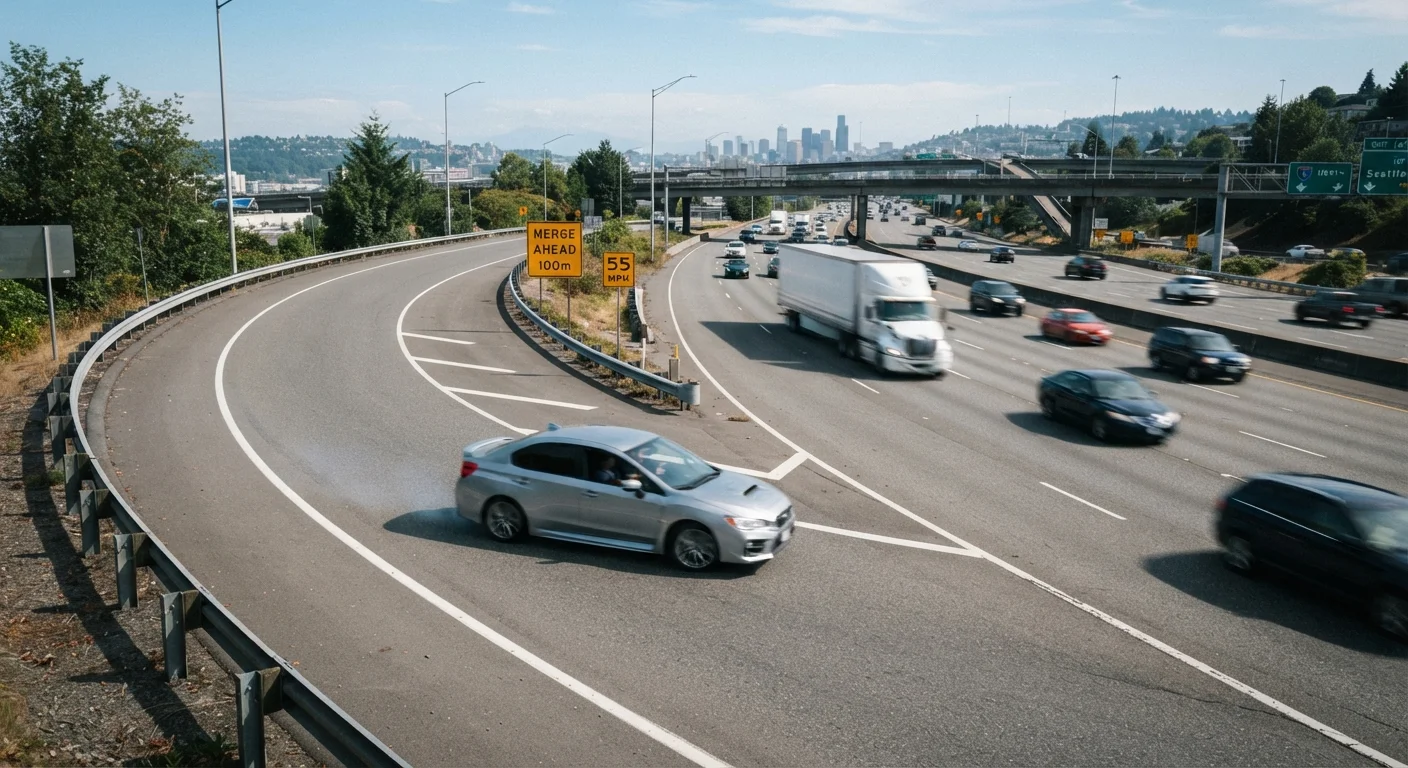
Why Motorway Merging Feels Harder Than It Is
Motorway on-ramps concentrate several driving demands into a short stretch of road: acceleration, observation, decision-making, and steering - all at speed. That combination understandably makes many drivers tense, particularly those who are newer to high-speed roads or who drive motorways infrequently. The underlying skill, however, is straightforward once you understand what the on-ramp is actually designed to do.
The slip road is not an obstacle - it is a tool. Its purpose is to give you time and distance to reach the speed of motorway traffic before you physically join it. Drivers who use that ramp confidently and purposefully almost always merge cleanly. Those who approach it tentatively, lifting off the throttle or braking mid-ramp, make the task far harder than it needs to be.
Merging is also a two-sided process. Drivers already on the motorway are expected to help where it is safe. Understanding that cooperative dynamic can significantly reduce the anxiety of feeling like you are pushing into a stream that does not want you.
Motorway Drivers: You Have a Role Too
Where it is safe and legal to do so, drivers already on the motorway are encouraged to move to an outer lane to give merging vehicles space. This cooperative approach - sometimes called a zipper merge in heavy traffic - keeps overall flow smoother. Always check it is clear before moving over, and return to the nearside lane when traffic allows.
If you find multi-lane situations tricky in general, our article on roundabout rules that confuse even experienced drivers addresses a related set of lane-discipline challenges at a very different type of junction.
How to Merge Safely: Step by Step
The steps below walk through the complete merge process - from entering the on-ramp to settling into the nearside lane. Followed consistently, they become a repeatable routine rather than a stressful improvisation each time.
What you will need
Properly adjusted door mirrors
Reduces blind spots so you can accurately judge gaps in motorway traffic before merging.
Functioning turn signal / indicator
Communicates your merge intention clearly to drivers already in the nearside lane.
Rear-view mirror
Provides an overview of traffic approaching from behind while you are still on the on-ramp.
Read motorway traffic before you reach the merge point
As soon as you enter the on-ramp, start scanning the motorway through any available sightlines - gaps in crash barriers, elevated ramp sections, or the curve of the slip road itself. Identify the speed of vehicles in the nearside lane and look for a gap you can target. The earlier you begin this assessment, the more time you have to plan rather than react.
Accelerate purposefully to match motorway speed
The on-ramp exists specifically to let you reach the speed of motorway traffic before you join it. Use the full length available and accelerate smoothly but decisively. Arriving at the merge point well below the flow speed forces other drivers to brake or swerve, creating unnecessary risk. Aim to be travelling at or close to the prevailing speed of the nearside lane by the time you reach the dashed white line where the ramp meets the carriageway.
Signal early and check your blind spot
Apply your right-hand indicator well before you need to merge - not at the last second. This alerts drivers in the nearside lane that you intend to join. Before committing, check your door mirror, glance over your right shoulder to cover the blind spot, then check the mirror once more. A quick shoulder check is enough; dwelling too long diverts your attention from the road ahead.
Identify a safe gap and commit to it
A usable gap is one where you will not cause the vehicle behind you in the nearside lane to brake. At motorway speeds, a gap of roughly two seconds between vehicles is generally enough room to filter in without disrupting traffic flow. Once you have identified your gap, commit - hesitating causes unpredictable reactions from drivers behind. Steer smoothly into the lane and hold your speed.
Settle into the nearside lane and cancel your signal
Once you are fully in the nearside lane, cancel your indicator and match the pace of surrounding traffic. Resist the immediate urge to move to an outer lane - give yourself a moment to confirm your position, check mirrors, and establish a safe following distance from the vehicle ahead. Premature lane changes right after merging are a frequent cause of near-misses on motorways.
Speed Matching Prevents the Most Merge Crashes
Arriving at the merge point too slowly is the single most common motorway merge error. A merging vehicle travelling significantly slower than surrounding traffic forces sudden braking in the nearside lane, which can cascade into rear-end collisions further back. Use the full ramp length to reach the speed of the flow before you join it.
Never Stop Voluntarily on a Live On-Ramp
Stopping on an on-ramp when motorway traffic is moving puts you at serious risk of a rear-end collision from drivers behind who are still accelerating. If you cannot find a gap, slow progressively and wait for one - but only come to a full stop if the motorway itself is stationary and there is genuinely no other option.
For a deeper look at what comes after the merge - including when and how to move through outer lanes and how to time your exit - see our guide to motorway merging, lane discipline, and exit timing.
Common Mistakes That Make Merging Harder
Even experienced drivers fall into habits that undermine an otherwise straightforward manoeuvre.
- Braking on the ramp: Anxiety triggers an instinctive lift off the throttle. On an on-ramp, this is counterproductive - you need to be building speed, not shedding it.
- Fixating on a single gap: If your target gap closes before you reach it, you need to quickly identify the next one. Scan continuously rather than locking onto one space.
- Late signalling: Indicating at the last moment gives drivers in the nearside lane almost no time to react. Signal early, even if it feels premature.
- Forcing the merge: If a gap genuinely is not there, ease your speed slightly and create one. Forcing entry at 65 mph is far more dangerous than waiting a few extra seconds.
Motorway and urban driving demand very different mindsets. If you regularly move between both, safe driving in urban areas covers the unpredictable hazard profile that city roads present compared to the structured flow of a motorway.
The content on this site is for informational purposes only and is not a substitute for professional advice. Always consult a qualified professional for guidance specific to your situation.