

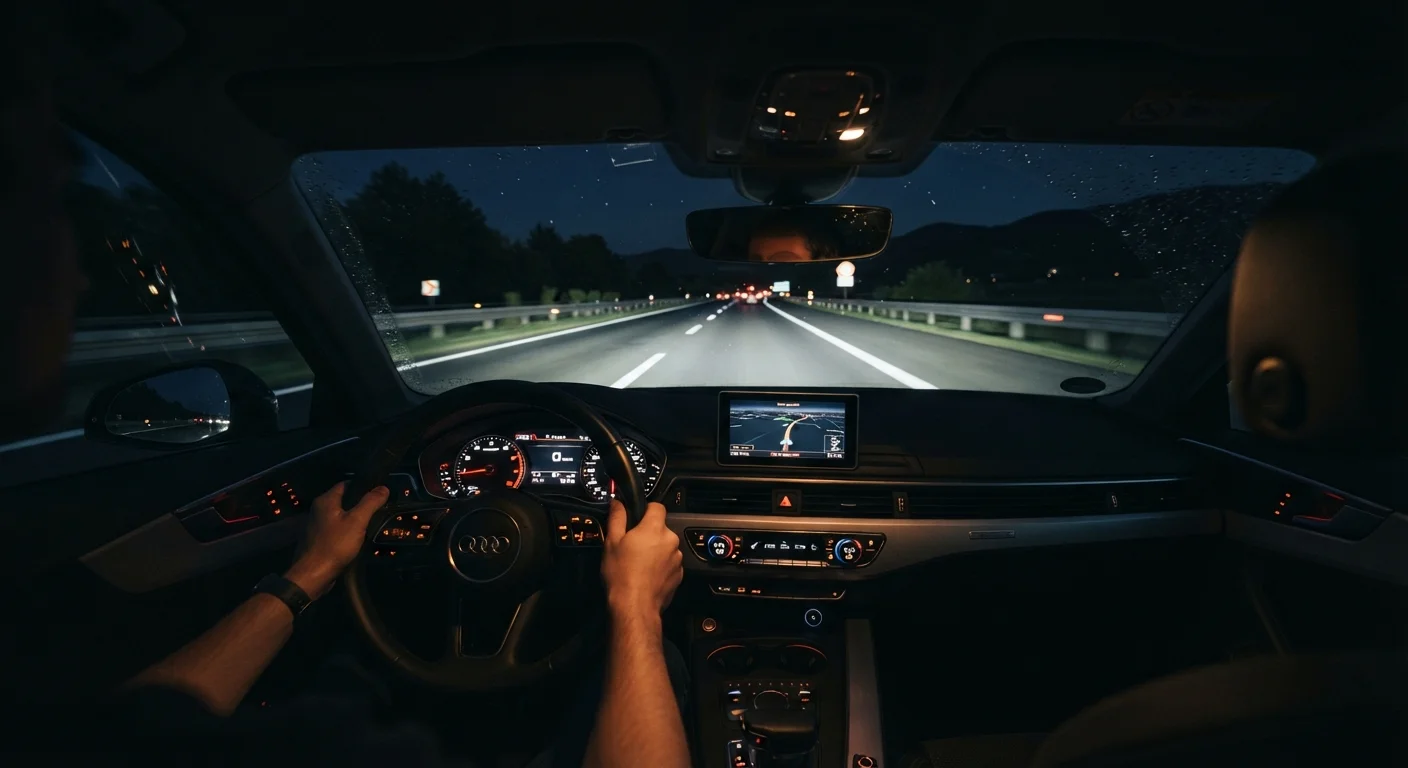
Why Night Driving Feels Different - and Why That's Normal
Darkness fundamentally changes what driving demands of you. Human eyes aren't designed for high-speed nighttime navigation - peripheral vision narrows, depth perception becomes less reliable, and color contrast drops significantly. These aren't failings; they're the normal limits of human vision in low light.
What separates confident night drivers from anxious ones isn't a special talent. It's a set of specific, learnable habits that account for these limitations. Understanding why darkness is harder helps you address the right problems instead of just feeling vaguely uneasy. See also how your eyes should be working at every moment behind the wheel - the techniques there apply even more critically after dark.
The Habits That Make the Difference
These practices address the real risk factors of night driving: reduced visibility, glare, fatigue, and slower response time.
Never overdrive your headlights - keep your speed within your stopping distance.
Standard headlights illuminate roughly 160-250 feet ahead. If you're traveling fast enough that you can't stop within that distance, you won't have time to react to an obstacle. This is one of the most common and correctable night driving errors.
Look slightly to the right of oncoming headlights to avoid temporary blindness from glare.
Staring directly at bright oncoming lights causes temporary glare blindness that can last several seconds - enough to miss a hazard. Shifting your gaze to the road's right edge line uses your peripheral vision while protecting your central vision.
Clean your windshield and headlight lenses before any extended night drive.
Dirt, film, and condensation on glass scatter light, dramatically worsening glare and reducing what you can see. Oxidized or yellowed headlight lenses can cut light output by a significant margin. These are quick checks with outsized impact.
Use high beams strategically on unlit roads and dim them consistently for oncoming traffic.
High beams can more than double your visible range on dark roads, giving you critical extra seconds to react. Failing to dim them for oncoming drivers creates the same glare problem you're trying to avoid yourself - and is illegal in most states.
Increase your following distance to at least three to four seconds after dark.
Night reduces the time you have to identify hazards ahead of the vehicle in front of you. A longer following distance gives you more reaction time and makes tail-light changes easier to respond to.
Plan stops on long night drives and monitor your tiredness actively.
Fatigue judgment is impaired by fatigue itself - tired drivers routinely underestimate how impaired they are. Scheduling breaks every 90 to 120 minutes on night trips removes the need to rely on that faulty self-assessment.
Managing Fatigue: The Risk You Can't See
Drowsiness is more dangerous at night partly because it overlaps with your body's natural sleep pressure. The hours between midnight and 6 a.m. are when fatigue-related crashes peak, according to the National Highway Traffic Safety Administration (NHTSA). But tiredness can set in well before those hours, especially after a long day.
Schedule Breaks Before You Need Them
By the time you feel truly drowsy, your reaction time is already impaired. On any night drive longer than 90 minutes, plan a stop in advance - not as a maybe, but as part of the route. A 15-minute break at a well-lit rest area resets alertness far more effectively than caffeine alone. Good rest before the drive matters too; sleep hygiene habits that support better rest are worth reviewing if late-night driving is regular for you.
The physiological reasons why tired drivers miss hazards are worth understanding in depth - our article on what tiredness actually does to your reaction time explains what's happening in your brain and body. For recognizing early warning signs before they become dangerous, see recognising the warning signs of driver fatigue.
The honest rule: if you're yawning repeatedly, struggling to keep your eyes focused, or find your mind drifting, no amount of willpower substitutes for stopping. Pull over safely, rest, or switch drivers.
Building the Night Driving Mindset
Anxiety behind the wheel at night often comes from feeling unprepared rather than from the road itself. Drivers who feel confident aren't ignoring risk - they're managing it deliberately. That means checking headlights and mirrors before leaving, planning routes in advance when possible, and giving themselves more time so speed pressure doesn't force poor decisions.
It's also worth recognizing that distractions hit harder at night when your visual field is already reduced. How different distractions affect driving attention breaks down why cognitive load compounds visual limits - a useful read before any night trip. Similarly, habits that quietly erode safe driving over time shows how small shortcuts accumulate into real risk - patterns that tend to be harder to catch when you're already managing reduced visibility.
Night Vision Varies Person to Person
Age is a meaningful factor in night driving ability. The American Optometric Association notes that the pupil's ability to dilate in darkness declines with age, reducing light intake to the eye. If you find night driving noticeably more challenging than it used to be, an eye exam is a practical first step - some issues, like uncorrected astigmatism, significantly worsen glare and can be addressed with prescription lenses.
Confidence at night isn't about being fearless. It's about knowing exactly what adjustments to make - and making them consistently.
The content on this site is for informational purposes only and is not a substitute for professional advice. Always consult a qualified professional for guidance specific to your situation.