

The Two-Part Equation Most Drivers Overlook
Ask most drivers what determines stopping distance and they'll say speed. Speed matters enormously - but it's only part of the picture. Total stopping distance is actually the sum of two separate phases: reaction distance and braking distance.
Reaction distance is the ground your car covers from the instant you perceive a hazard to the moment your foot makes contact with the brake pedal. At 60 mph, a typical reaction time of 1.5 seconds means the vehicle travels roughly 132 feet before braking even begins. Add fatigue, a glance at your phone, or any other distraction, and that number climbs fast.
Braking distance is what follows - the additional distance needed for the vehicle to actually stop once the brakes are engaged. This is where physics takes over. As explained in our breakdown of speed and stopping math, braking distance increases with the square of your speed. Doubling your speed quadruples the braking distance. Most drivers think the relationship is linear; it isn't.
132 ft
Reaction distance at 60 mph (1.5 sec reaction)
At 60 mph, a driver with an average 1.5-second reaction time travels approximately 132 feet before braking begins - longer than many car lengths.
4x
Braking distance increase when speed doubles
Because braking distance scales with the square of speed, doubling your speed quadruples the braking distance required to stop.
2x
Stopping distance increase on wet roads
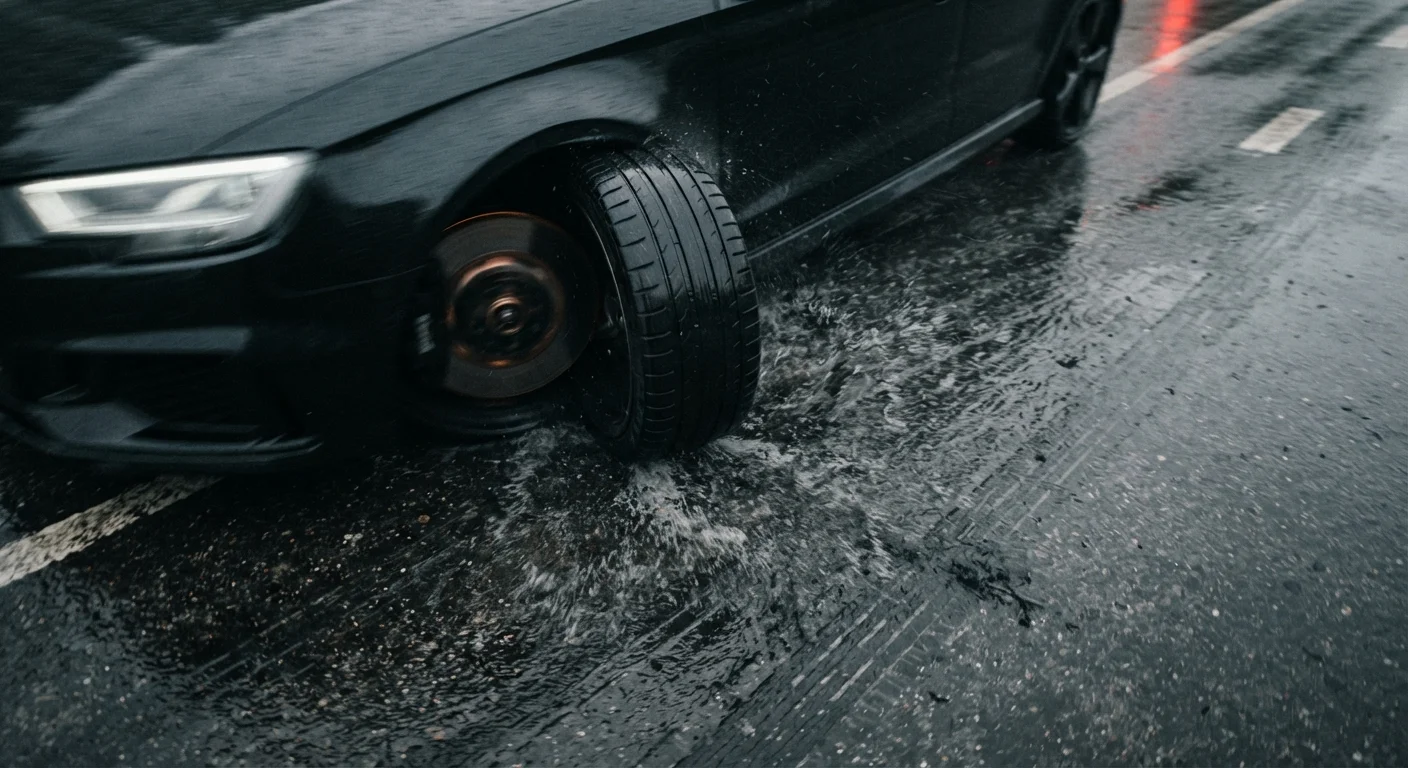
Wet pavement roughly doubles stopping distance compared to dry asphalt due to reduced friction between tyres and road surface.
How Road Surface Changes Everything
The grip between your tyres and the road - called friction - is what actually brings your car to a stop. Different surfaces provide very different levels of friction, and conditions can shift that level dramatically within the same road.
Dry asphalt offers the highest friction for most everyday driving. Wet pavement reduces that friction significantly, often doubling stopping distances. Ice and packed snow can extend stopping distances to five times or more compared to dry conditions. Even seemingly minor factors - painted road markings, metal manhole covers, loose gravel - create sudden low-friction patches.
For a practical look at how rain specifically affects your ability to control and stop a vehicle, see our guide on driving in heavy rain. The core principle is straightforward: whenever surface friction decreases, your following distance needs to increase to compensate.
Night Driving Adds Another Layer
Reduced visibility at night means hazards appear later in your line of sight, effectively compressing the time you have to react. This shrinks the practical margin that your following distance provides. Learn how darkness changes the physics of the road and what adjustments can help.
Tyres, Brakes, and the Vehicle's Role
Your car's mechanical condition plays a direct role in how quickly it can stop. Two components matter most: tyres and brakes.
Tyres are the only contact between your vehicle and the road. Worn tread reduces a tyre's ability to channel water away from the contact patch, sharply increasing stopping distances on wet roads. Underinflated tyres distort the contact patch and handle heat poorly under heavy braking. Check tread depth regularly - the US legal minimum is 2/32 of an inch, though handling degrades noticeably before that threshold is reached.
Brakes in poor condition - worn pads, warped rotors, or a soft pedal - reduce your system's clamping force and extend stopping distance. If you're noticing squealing, vibration, or a spongy pedal feel, our article on brake wear walks through what those symptoms typically mean and when to get them inspected by a qualified mechanic.
Use the 3-Second Rule as a Starting Point
Pick a fixed point on the road and count the seconds between when the vehicle ahead passes it and when you do. In good conditions, aim for at least 3 seconds. In rain, low visibility, or at higher speeds, extend that to 4-6 seconds. This simple habit builds in buffer for all the variables that affect stopping distance.
Putting It Together: What You Can Actually Control
Understanding stopping distance isn't just an academic exercise - it's the foundation of safe following distance decisions. The key variables you can influence are your speed, your alertness, your vehicle's maintenance, and how much space you leave ahead of you.
Slowing down even modestly has an outsized effect. Dropping from 65 mph to 55 mph isn't just a 15% reduction in speed - it meaningfully shortens both reaction distance and braking distance. Staying off your phone, addressing fatigue, and avoiding impairment protect your reaction time. Keeping tyres properly inflated and brake components in good shape protects the mechanical side.
The practices that account for all these variables overlap significantly with defensive driving principles - anticipating hazards early, creating buffer space, and adjusting to conditions rather than assuming the best case. Stopping distance is ultimately a measure of the gap between what happens and what you were prepared for. Closing that gap is within every driver's reach.
Frequently Asked Questions
Reaction distance is how far your car travels while your brain registers a hazard and your foot reaches the brake. Braking distance is how far the car continues after the brakes engage. Together they make up total stopping distance. At highway speeds, reaction distance alone can be longer than many drivers expect.
Wet roads can roughly double stopping distance compared to dry conditions, because water reduces the friction between tyres and pavement. In standing water, aquaplaning can eliminate braking ability almost entirely. Slowing down and increasing following distance in rain are essential adjustments.
Yes - significantly. Tyre grooves channel water away from the contact patch, keeping rubber in contact with the road. Worn tyres have less ability to do this, extending stopping distances especially in wet conditions. In the US, tyres are legally required to have at least 2/32 of an inch of tread depth.
Stopping distance grows with the square of your speed, not linearly. Going from 30 mph to 60 mph doesn't just double your stopping distance - it quadruples it. This non-linear relationship is one of the most underappreciated facts about vehicle physics.
Absolutely. Fatigue, distraction, and impairment all increase reaction time. Even a fraction of a second of extra delay translates into meaningful additional feet of travel at typical road speeds. Staying alert and minimizing distractions is as important as vehicle condition.
The content on this site is for informational purposes only and is not a substitute for professional advice. Always consult a qualified professional for guidance specific to your situation.