

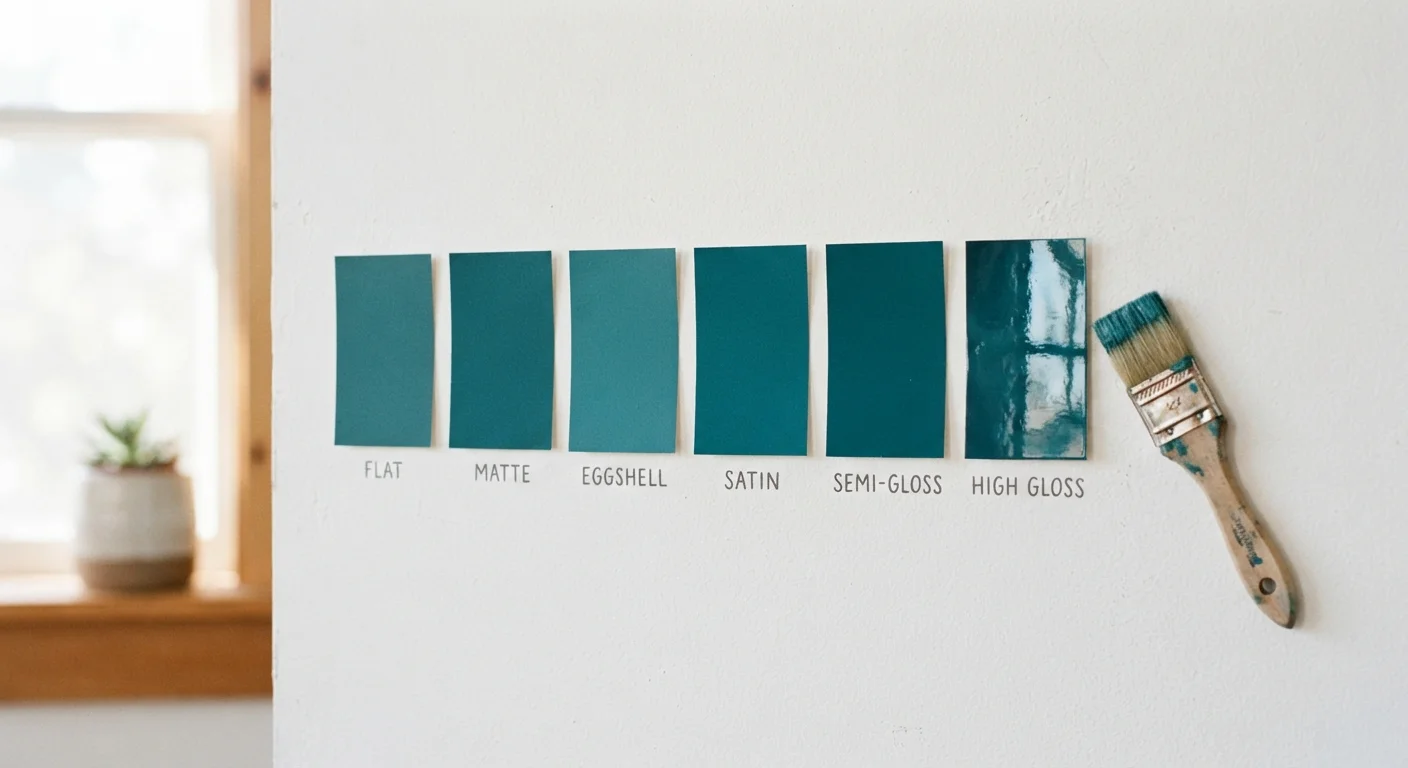
How to Read a Paint Sheen Level
Every interior paint carries a sheen level - the amount of light the dried surface reflects. Sheen affects not just appearance but how well the paint holds up to cleaning, moisture, and daily wear. Understanding where each finish sits on the spectrum lets you match the right paint to each room and surface confidently.
| Number of standard sheen levels | 5 (flat, eggshell, satin, semi-gloss, gloss) |
| Most forgiving finish for imperfect walls | Flat / Matte |
| Most washable finish for high-traffic areas | Semi-Gloss or High-Gloss |
| Recommended finish for interior trim and doors | Semi-Gloss or Satin |
| Best finish for living and dining rooms | Eggshell or Satin |
| Finish most likely to highlight surface flaws | High-Gloss |
For a broader look at renovation vocabulary, see our plain-English home improvement glossary.
Sheen
The degree of light reflectivity in a dried paint finish. Higher sheen means more light bounces off the surface, creating a shinier appearance.
Flat / Matte Finish
A paint finish with little to no reflectivity. It absorbs light rather than reflecting it, which helps hide surface imperfections.
Eggshell Finish
A low-lustre finish that offers slightly more sheen than flat paint. Named for its resemblance to the soft glow of an eggshell surface.
Satin Finish
A mid-range sheen that provides a smooth, velvety appearance with moderate reflectivity. More durable and washable than eggshell.
Semi-Gloss Finish
A noticeably shiny finish that resists moisture and is easy to clean, making it well-suited to kitchens, bathrooms, and trim.
High-Gloss Finish
The shiniest available finish, with maximum light reflectivity. Very durable and wipeable but will highlight every imperfection on a surface.
Each Finish Explained: Where It Works and Where It Doesn't
Flat / Matte
Flat paint absorbs light, creating a uniform, non-reflective surface that does an excellent job concealing drywall patches, roller marks, and minor wall texture irregularities. This makes it the go-to choice for ceilings and low-traffic adult bedrooms. The trade-off: flat finishes are the hardest to clean - scrubbing can remove the paint itself. Avoid flat paint in kitchens, bathrooms, hallways, or children's rooms.
Eggshell
Eggshell adds the faintest hint of sheen - enough to improve washability slightly without drawing attention to surface flaws. It's a practical choice for living rooms, dining rooms, and adult bedrooms that occasionally need wiping down. Eggshell is one of the most commonly used wall finishes in US homes for good reason: it balances aesthetics with modest durability.
Satin
Satin sits squarely in the middle of the sheen spectrum. Its smooth, velvety look holds up well to repeated cleaning, making it appropriate for children's bedrooms, hallways, and family rooms that see regular activity. Satin also works on doors and window casings when a subtler look is preferred over semi-gloss.
Sheen Names Vary by Manufacturer
Paint companies don't use a universal naming standard, so 'satin' from one brand may perform more like 'eggshell' from another. Always check the gloss measurement (listed on the can or spec sheet) rather than relying solely on the finish name. This helps you compare products consistently, especially when switching brands mid-project.
Semi-Gloss
Semi-gloss is noticeably shiny and highly resistant to moisture and staining. It's the standard choice for interior trim, baseboards, doors, and window frames - areas that take physical wear and benefit from easy cleaning. In kitchens and bathrooms, semi-gloss on walls provides reliable humidity resistance. Because it reflects light, it will emphasise any surface imperfections, so prep work matters.
High-Gloss
High-gloss delivers maximum sheen and the most durable, hardest finish available. It's typically reserved for accent features, cabinetry, furniture, and decorative millwork rather than large wall surfaces. High-gloss amplifies every bump, patch, and brush stroke, so surfaces must be meticulously prepared and primed before application. When applied well, the result is striking - but it requires patience and skill to execute cleanly.
For advice on the finishing details that elevate a room from adequate to polished, see seven finishing details that make a real difference.
5
Distinct sheen levels commonly available
Most US paint manufacturers categorise interior finishes into five standard sheen levels, from flat to high-gloss.
~60°
Gloss measurement angle used by industry
Paint sheen is typically measured using a 60-degree gloss meter; higher readings indicate a shinier, more reflective finish.
Quick-Reference: Finish by Room and Surface
| Location / Surface | Recommended Finish | Notes |
|---|---|---|
| Ceilings | Flat | Hides texture and imperfections; not subject to cleaning |
| Living rooms & dining rooms | Eggshell or Satin | Balance of appearance and light washability |
| Adult bedrooms | Flat or Eggshell | Low-traffic; prioritise a soft, calm look |
| Children's bedrooms | Satin | Easier to wipe crayon and smudges |
| Hallways & high-traffic walls | Satin or Semi-Gloss | Durability and cleanability are priorities |
| Kitchens & bathrooms | Semi-Gloss | Moisture and stain resistance |
| Trim, doors & baseboards | Semi-Gloss or Satin | Defines architectural detail; withstands contact |
| Cabinets & accent features | High-Gloss | Striking finish - requires careful surface prep |
For a deeper comparison of how each sheen performs in real-world conditions, see our detailed paint sheens comparison guide. Interior finishes are also distinct from exterior requirements - for guidance on outdoor surfaces, see exterior paintwork, render, and masonry care.
The content on this site is for informational purposes only and is not a substitute for professional advice. Always consult a qualified professional for guidance specific to your situation.