

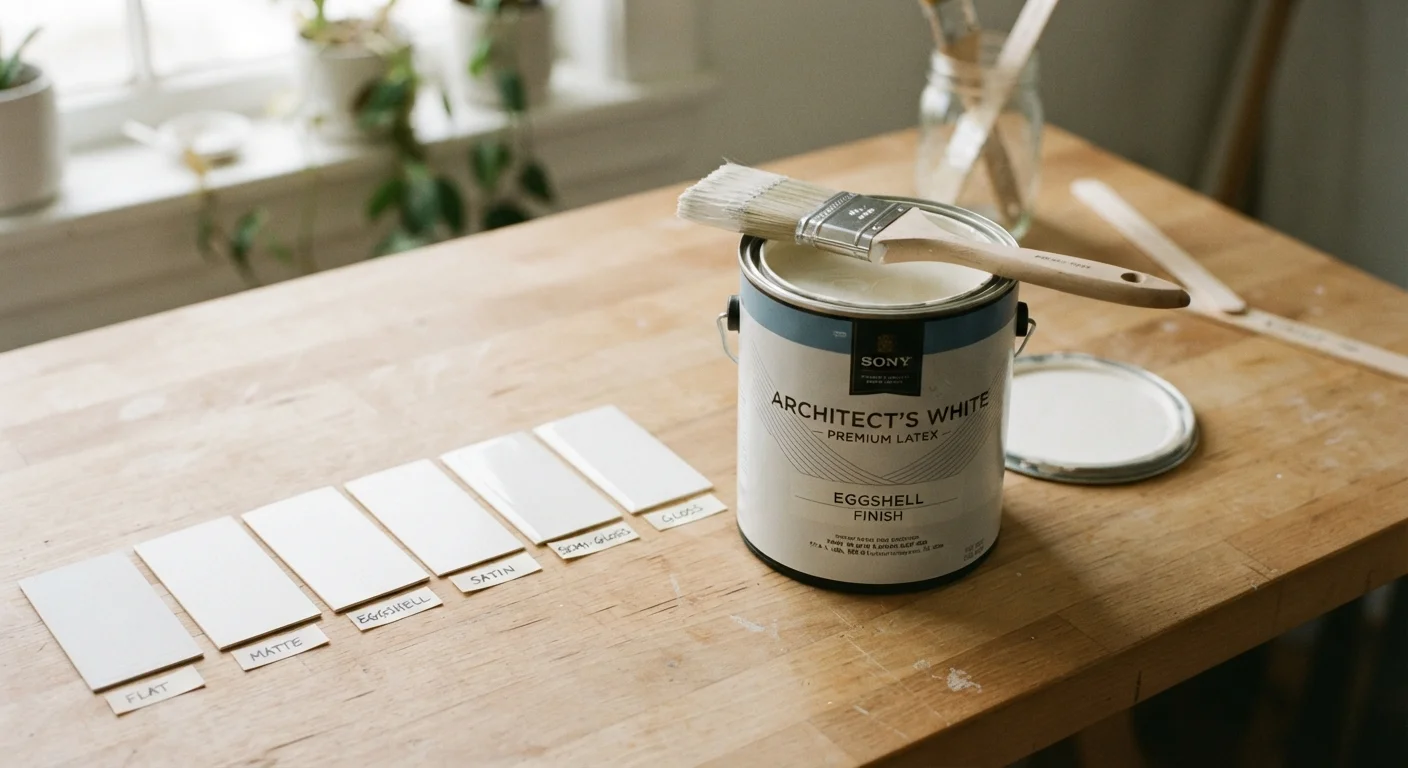
Our Verdict
No single paint sheen works perfectly in every room. The right choice depends on how much traffic the surface sees, how much natural light enters, and how often you need to clean. Matching sheen to the room's function - rather than choosing purely on appearance - produces the most durable and attractive result.
| Best for | Recommended |
|---|---|
| Ceilings and low-traffic formal rooms | Flat |
| Living rooms, dining rooms, and adult bedrooms | Eggshell |
| Kitchens, bathrooms, kids' rooms, and hallways | Satin |
| Trim, doors, cabinets, and window frames | Gloss |
Why Paint Sheen Matters More Than Color
Most homeowners agonize over color swatches but choose a sheen almost as an afterthought. That's a common misstep. Paint sheen - the degree of light reflectivity in a dried paint film - determines how a color reads in a room, how visible wall flaws are, and critically, how well the surface holds up to everyday cleaning.
Sheen levels are determined by the ratio of pigment to binder in the paint formula. Higher-gloss paints contain more binder and less pigment, creating a harder, shinier surface. Lower-sheen paints carry more pigment, which scatters light and softens the appearance - but also leaves a more porous film that absorbs stains more readily.
Understanding this trade-off is the foundation for every smart sheen decision. As you'll see in our finishing details guide, sheen selection is one of those small choices that separates a professional-looking result from an uneven one.
Flat, Eggshell, Satin, and Gloss: How Each Performs
Here's a practical breakdown of each major sheen level and where it performs best.
Flat (Matte)
Flat paint reflects almost no light, which makes it excellent at disguising uneven drywall, patching repairs, and textured surfaces. It's the standard choice for ceilings and is widely used in formal living rooms or bedrooms that rarely see spills or greasy hands. The trade-off is durability: flat finishes scuff and mark easily and can't withstand repeated scrubbing without the paint film wearing away.
Eggshell
Named for its resemblance to the surface of an eggshell, this finish sits just above flat. It reflects a small amount of light and creates a warm, inviting look on walls. It can handle an occasional gentle wipe-down, making it a popular choice for living rooms, dining rooms, and adult bedrooms - spaces that see regular use but not constant moisture or heavy contact.
Satin
Satin has a soft, pearl-like sheen and is one of the most practical finishes for active households. It resists moisture, tolerates repeated cleaning without dulling, and holds up well in high-traffic zones. Kitchens, bathrooms, hallways, children's rooms, and laundry rooms are all natural candidates. One consideration: because satin reflects more light, it can highlight roller marks or brush strokes if application technique is inconsistent.
Gloss and Semi-Gloss
Gloss finishes are the most reflective and hardest-wearing of all. They're typically reserved for trim work - baseboards, door frames, window casings, and cabinet fronts - where durability and the ability to wipe clean repeatedly matter most. Gloss also draws the eye, which makes it a deliberate design choice rather than a default. Semi-gloss occupies the space between satin and full gloss and is a practical alternative for bathroom walls and kitchen backsplash areas.
| Flat | Eggshell | Satin | Gloss | |
|---|---|---|---|---|
| Light reflectivity | Very low | Low to slight | Moderate pearl | High to very high |
| Durability / scrubbability | Low - marks easily | Moderate - light wipe only | Good - handles scrubbing | Excellent - very washable |
| Hides wall imperfections | Excellent | Good | Fair | Poor - highlights flaws |
| Moisture resistance | Poor | Fair | Good | Very good |
| Best surfaces | Ceilings, formal rooms | Living rooms, bedrooms | Kitchens, baths, hallways | Trim, doors, cabinets |
| Application forgiveness | Very forgiving | Forgiving | Moderate - shows brush marks | Least forgiving |
Choosing by Room: A Practical Guide
Matching sheen to room function avoids the most common mistakes homeowners make when repainting.
Test Sheen in the Actual Room First
Paint colors and sheens look different depending on a room's light source and orientation. Before committing to a full room, apply a large test patch - at least 12 by 12 inches - and observe it at different times of day. A satin finish in a north-facing room will read differently than the same paint in a south-facing one with abundant sunlight.
- Ceilings: Flat paint is almost always the right call. Ceilings rarely need cleaning, and any sheen on a ceiling will catch overhead light and emphasize every imperfection.
- Living and dining rooms: Eggshell is a reliable default. It enriches color without excessive shine and stands up to the occasional smudge.
- Kitchens: Satin on walls; semi-gloss or gloss on cabinets and trim. Grease and moisture call for a washable, durable surface.
- Bathrooms: Satin or semi-gloss. Steam and humidity demand a film that won't absorb moisture or peel prematurely.
- Hallways and staircases: Satin. These high-traffic lanes take constant brushing from bags, shoulders, and furniture.
- Children's rooms: Satin. Crayon, marker, and sticky fingerprints are a given - you'll want a surface that actually scrubs clean.
- Trim throughout the house: Semi-gloss or gloss. The contrast between a slightly reflective trim and a lower-sheen wall is a hallmark of a finished, polished interior.
If you're also thinking about exterior surfaces, the same logic of durability versus aesthetics applies. See our guide to exterior paintwork and masonry for how to read wear signs on outside surfaces.
Common Pitfalls and How to Avoid Them
Even with the right sheen selected, a few application mistakes can undermine the result.
Avoid High Sheen on Damaged Drywall
Gloss and satin finishes act like a spotlight on uneven surfaces. If your walls have visible nail pops, tape seams, or sanding marks, higher-sheen paints will make these imperfections more prominent - not less. Always complete thorough prep work, including filling, sanding smooth, and priming, before applying any finish above eggshell.
Don't mix sheen levels mid-wall. If you're patching a section and touch it up with a different batch or sheen, the patched area will reflect light differently from the surrounding paint and remain visible - especially in raking light.
Surface prep matters for higher sheens. The shinier the finish, the more it amplifies surface flaws. Satin and gloss on poorly prepared drywall will reveal every ding, seam, and patch. Fill and sand before painting if you're moving up in sheen.
Recoating flat over gloss needs priming. If you're converting a glossy surface to a lower sheen, you'll typically need to sand and prime first. Paint adhesion between mismatched sheens is unreliable without proper preparation.
For a deeper look at how sheen choices interact with different interior applications, the interior paint finishes reference guide covers additional nuances worth reviewing before you buy.
~80%
Homeowners who repaint within 5 years
Industry estimates suggest the majority of interior repaints happen within five years of the previous coat, often due to wear in high-traffic areas where sheen was under-specified.
3-5×
More washable cycles for gloss vs. flat
Paint manufacturers' durability testing generally shows gloss and semi-gloss finishes withstand significantly more scrub cycles before film breakdown compared to flat paints.
The content on this site is for informational purposes only and is not a substitute for professional advice. Always consult a qualified professional for guidance specific to your situation.