

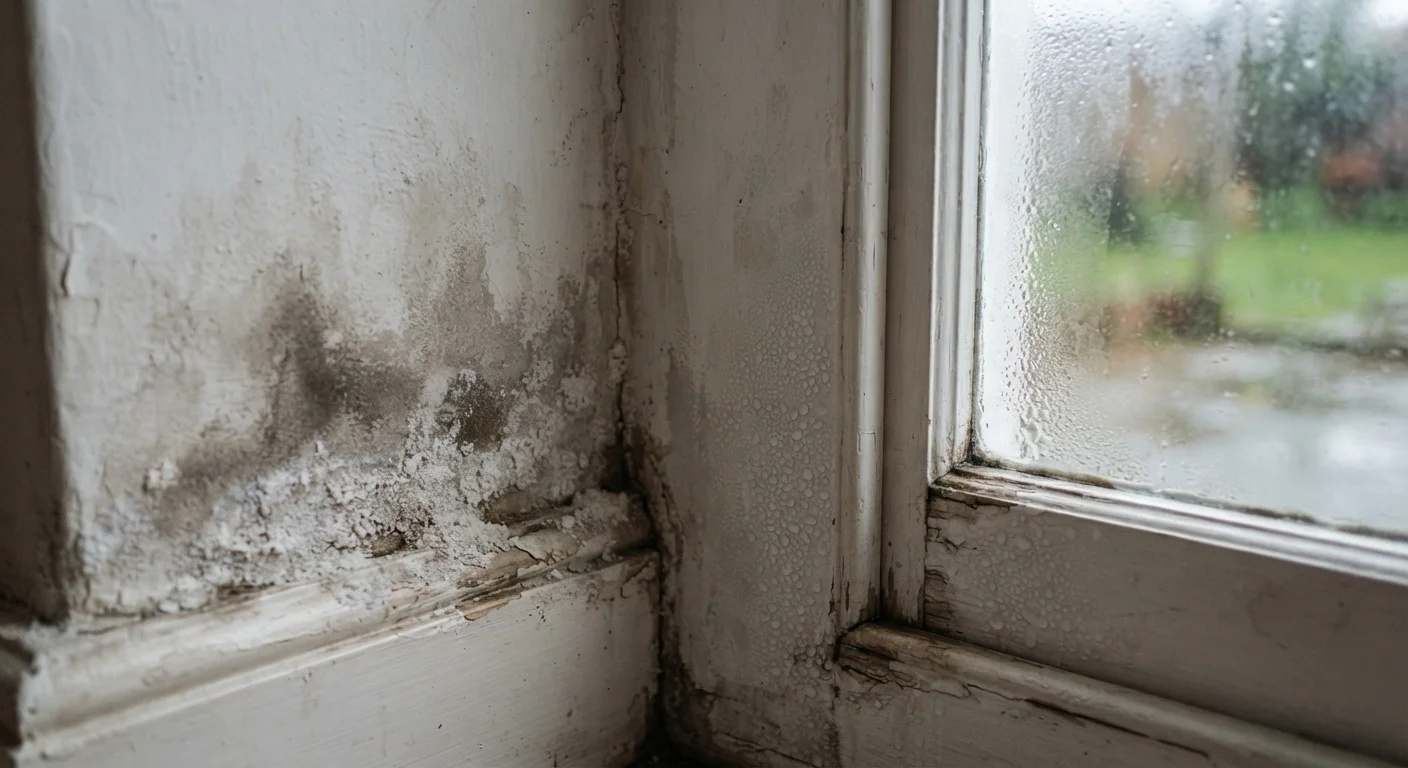
Option A
Penetrating or Rising Damp
Water entering from outside or below ground level.
Best for: Identifying moisture problems in older homes, basements, or walls directly exposed to rain, soil, or failed exterior sealing.
Option B
Condensation
Warm, humid indoor air hitting cold surfaces.
Best for: Understanding moisture buildup in kitchens, bathrooms, bedrooms, and poorly ventilated spaces during colder months.
Why Getting the Diagnosis Right Matters
Damp walls and condensation can look almost identical at first glance - discoloured patches, musty smells, and the threat of mould growth. But treating condensation as if it were penetrating damp, or vice versa, wastes money and leaves the actual problem to worsen. A damp-proofing contractor cannot fix a ventilation problem; opening more windows will not stop rain water seeping through cracked render.
The good news is that you can often make a confident initial diagnosis yourself using pattern, location, timing, and a few simple observations - no specialist equipment required. That said, when in doubt, a qualified surveyor can provide a definitive assessment before you commit to any significant repair work.
For a broader look at all three moisture-related problems that affect homes, see our guide on damp, mould, and condensation.
How to Tell Them Apart: Key Diagnostic Clues
Use these observable differences to guide your assessment:
| Criterion | Penetrating / Rising Damp | Condensation |
|---|---|---|
| Source of moisture | External water ingress or ground moisture | Humid indoor air hitting cold surfaces |
| Typical location | Base of walls, behind cracked render, below gutters | Window frames, corners, behind furniture |
| Seasonal pattern | Worsens with rain or persistent year-round | Worst in autumn and winter |
| Tidemarks or efflorescence | Often present | Absent |
| Response to ventilation | Little or no improvement | Significant improvement |
| Typical repair approach | Structural - fix building envelope or DPC | Behavioural and insulation-based |
| Professional assessment needed? | Usually yes | Often no, for mild cases |
Location and Pattern
Damp tends to appear at predictable structural weak points: the base of exterior walls (rising damp), patches directly behind areas of cracked or porous masonry (penetrating damp), or below faulty gutters and flashings. The affected area often has a tidemarks - a defined upper boundary where moisture stopped rising - and may show white powdery deposits called efflorescence, which are salts left behind as water evaporates through masonry.
Condensation, by contrast, settles on the coldest surfaces first: window glass, external wall corners, areas behind wardrobes or sofas pushed against outside walls, and surfaces with poor airflow. It does not usually produce tidemarks or efflorescence.
Seasonal Behaviour
Condensation is worst in autumn and winter, when the gap between indoor air temperature and cold surface temperature is greatest. It typically improves with warmer weather and increased ventilation. Penetrating damp, on the other hand, tends to worsen during or after rain and may remain relatively stable in dry conditions. Rising damp is often persistent year-round, though it can appear worse in cold, wet periods.
When Both Issues Occur Together
In some homes - particularly older properties with solid masonry walls and limited ventilation - penetrating damp and condensation can occur simultaneously, making diagnosis harder. A professional damp survey uses a calibrated moisture meter to distinguish between surface condensation and moisture within the wall structure. If you are seeing widespread or worsening problems, independent professional assessment is the safest next step.
Addressing Each Problem Correctly
Fixing Condensation
Since condensation is an indoor humidity problem, the solutions focus on reducing moisture in the air and raising surface temperatures. Practical steps include:
- Using extractor fans in kitchens and bathrooms, ideally vented directly to outside rather than recirculating
- Keeping background heating consistent to avoid surfaces dropping to the dew point (the temperature at which air deposits moisture)
- Improving insulation at known cold bridges - corners, reveals, and behind fixed furniture
- Using a dehumidifier in persistently humid rooms
Gaps around windows and doors can also exacerbate the problem by allowing cold draughts to chill internal surfaces. Our article on caulking and weatherstripping covers how to seal these effectively.
Fixing Damp
Damp requires physical repairs to the building fabric. For penetrating damp, this typically means identifying and fixing the water entry point - repointing mortar, repairing render, replacing flashing, or clearing blocked gutters. For rising damp, a specialist will usually assess whether the damp-proof course (DPC) has failed or is absent and recommend appropriate remediation.
Because damp repairs frequently involve masonry, drainage, or structural elements, it is worth consulting a qualified surveyor or contractor rather than attempting remediation based on surface appearance alone. You can also review signs of waterproofing failure to understand when the problem has progressed beyond simple surface treatment.
For homes where wall insulation is also a factor, understanding how different materials perform in damp conditions matters - see our comparison of insulation materials for home walls for guidance on moisture-tolerant options.
The content on this site is for informational purposes only and is not a substitute for professional advice. Always consult a qualified professional for guidance specific to your situation.