

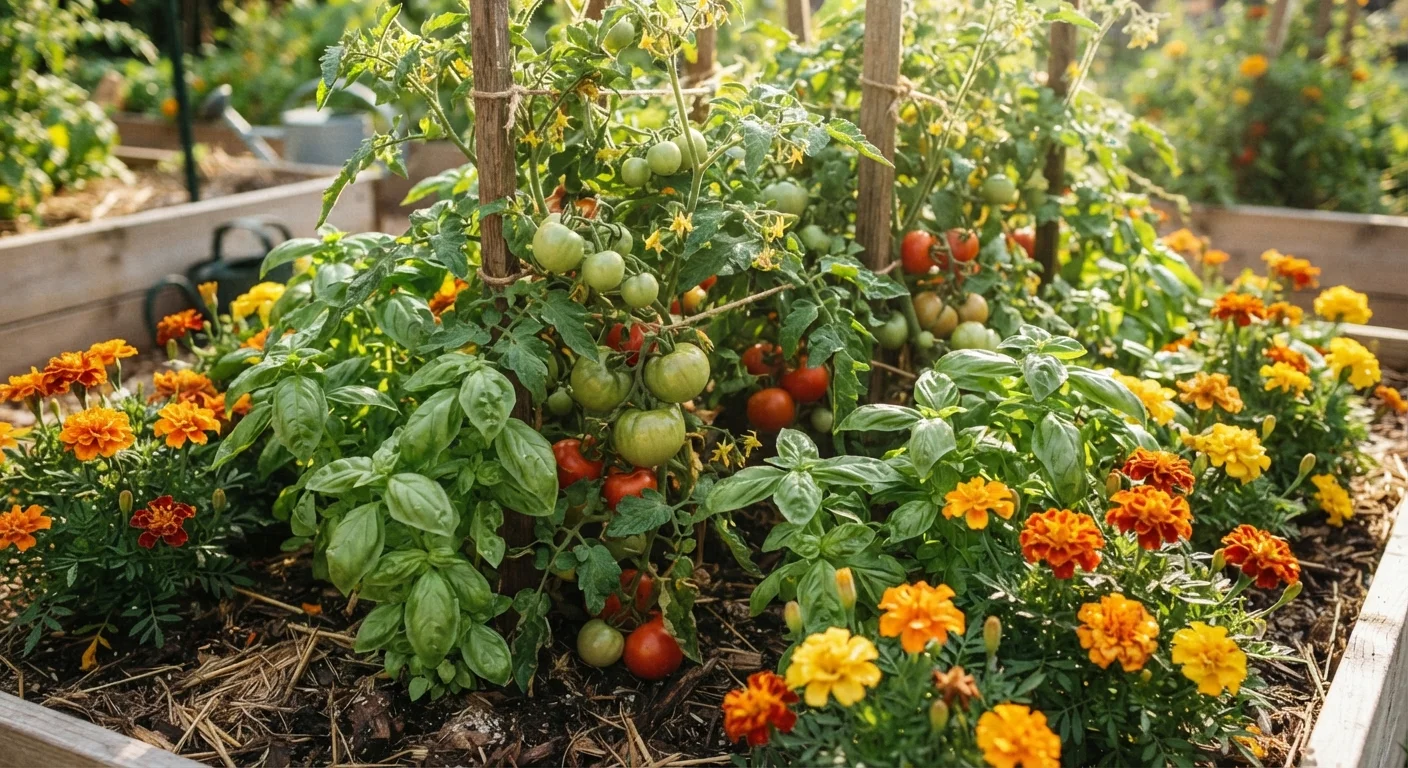
Why Plant Neighbors Matter
Companion planting is the practice of growing different plants in close proximity so they support one another. Some combinations have been used for generations, while others are backed by more recent horticultural research. The benefits can include natural pest suppression, improved pollination, better use of vertical and horizontal space, and even enhanced soil health.
It's worth noting that results vary depending on your climate, soil type, and local pest populations. Companion planting is generally most effective when combined with other good garden practices - healthy soil, appropriate watering, and good plant spacing. Think of it as one useful tool rather than a complete solution.
Whether you garden in raised beds or in the ground, these combinations are worth experimenting with. For a closer look at how your garden layout affects plant performance, see our article on raised beds vs. in-ground planting.
Tomatoes and Basil
One of the most widely cited garden pairings, tomatoes and basil are grown together in many kitchen gardens. Gardeners have long reported that basil may help deter aphids and whiteflies near tomato plants, though research on this specific effect is still mixed. What is more certain is that basil attracts pollinators when it flowers, and the two crops share similar needs for sunlight and water - making them practical companions from a logistics standpoint.
Plant basil around the base of tomato plants, spacing it close enough to share the bed without crowding either crop. Allow some basil plants to flower to maximize pollinator activity.
Basil and tomatoes share similar growing conditions, making them naturally practical garden companions.
The Three Sisters: Corn, Beans, and Squash
This combination has deep roots in Indigenous agricultural traditions of North America and represents one of the most well-documented examples of polyculture gardening. Each plant plays a distinct role: corn provides a vertical structure for beans to climb; beans fix nitrogen from the air into the soil, benefiting the other two plants; and squash spreads along the ground, shading out weeds and retaining soil moisture with its broad leaves.
The three sisters work best in a dedicated bed with enough space for squash to spread. Plant corn first, then beans once corn is several inches tall, then squash at the outer edges.
Each of the Three Sisters plays a structural role - the combination is greater than the sum of its parts.
Carrots and Onions
Carrot fly and onion fly are both common garden pests, and each is said to be deterred by the scent of the other's companion plant. Interplanting carrots and onions is a traditional strategy for reducing pest damage to both crops. While the evidence is largely observational, many gardeners find the combination worth trying, particularly because the two crops also use space efficiently - onions grow upright while carrots develop underground, so they don't compete much for light.
Alternate rows or intersperse the two crops throughout the same bed. Chives can be used as a substitute for onions if you prefer a perennial option.
Interplanting carrots and onions may confuse pests that target each crop individually.
Marigolds Throughout the Vegetable Garden
French marigolds (Tagetes patula) are among the most researched companion plants. Studies have shown that they produce compounds from their roots that can reduce populations of certain soil nematodes - microscopic worms that damage root crops. Their strong scent may also deter some above-ground pests, and their flowers attract beneficial insects, including hoverflies whose larvae prey on aphids.
Plant marigolds as a border around vegetable beds or intersperse them throughout. For nematode suppression, they are most effective when planted densely and left in place for a full growing season.
French marigolds are one of the few companion plants with solid research behind their pest-suppressing properties.
Cucumbers and Nasturtiums
Nasturtiums are sometimes called a trap crop because aphids are strongly attracted to them - often preferring nasturtiums over nearby vegetables. Planting them close to cucumbers can draw aphids away from the main crop. You'll need to monitor the nasturtiums and manage aphid populations on them, but this is typically easier than dealing with widespread infestation across an entire cucumber bed.
Nasturtiums also attract pollinators and grow quickly from seed, making them low-effort additions to the garden. Their flowers and leaves are edible, adding a secondary harvest.
Nasturtiums act as a trap crop, drawing aphids away from cucumbers and other nearby vegetables.
Lettuce and Tall Crops
Lettuce is a cool-season crop that tends to bolt (go to seed prematurely) in hot weather. Pairing it with taller plants - such as tomatoes, pole beans, or corn - provides partial afternoon shade that extends the lettuce season. This approach makes efficient use of vertical garden space and is especially useful in warm climates or during the shoulder seasons of spring and early summer.
Position lettuce on the north or east side of taller crops to maximize shade coverage during the hottest part of the day without blocking morning sun entirely. For low-growing ground-level options that complement this approach, our guide on ground cover plants covers additional candidates.
Pairing lettuce with taller plants provides shade that delays bolting in warm weather.
Making the Most of Companion Planting
Getting started is straightforward: choose two or three well-documented pairings, plant them together this season, and observe what happens in your specific garden. Keep simple notes on pest pressure, yields, and plant health - over time, you'll build a clear picture of what works in your conditions.
Track What Works in Your Garden
Companion planting outcomes can vary significantly by region, climate, and even individual plot conditions. Keep a simple garden journal - note what you planted together, any pest issues you observed, and your yields. After two or three seasons, you'll have personalized data that's far more reliable than general advice alone.
Companion planting pairs particularly well with other sustainable garden practices. Healthy, nutrient-rich soil gives every plant a stronger foundation. Our guide to composting at home explains how to build soil health from the ground up. If you're also interested in expanding your plant palette with lower-maintenance options, native plants can complement companion planting strategies by supporting local beneficial insects.
The content on this site is for informational purposes only and is not a substitute for professional advice. Always consult a qualified professional for guidance specific to your situation.