

Why Ground Cover Plants Deserve a Place in Your Garden
Bare soil invites weeds, loses moisture quickly, and erodes during heavy rain. Ground cover plants solve all three problems at once. By forming a dense, low-growing layer over the soil surface, they shade out weed seedlings, hold moisture in, and anchor soil with their root systems - all with far less ongoing effort than bare-ground alternatives like mulch alone.
Unlike lawn grass, most ground covers require minimal mowing and tolerate conditions that turf struggles with: dense shade, steep slopes, compacted soil, or prolonged dry spells. They're also a smart option for areas where mowing is impractical or where growing lawn grass isn't feasible. If you're working toward a low-maintenance garden, ground covers are one of the most reliable tools available.
The list below covers a range of well-regarded options - some familiar, some underused - organized to help you match the right plant to your specific site.
Creeping Thyme (Thymus serpyllum)
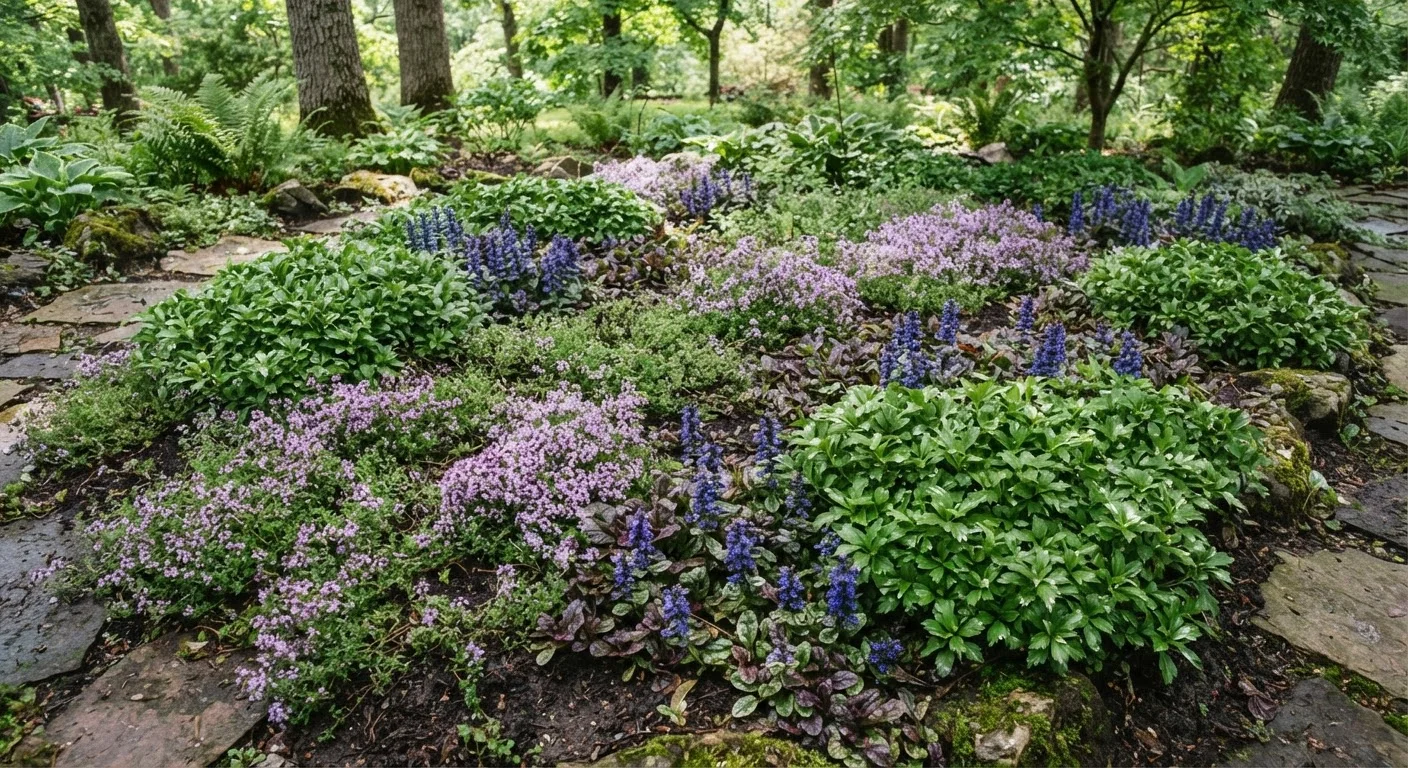
Creeping thyme is a sun-loving, drought-tolerant ground cover that forms a dense, fragrant mat just 2-4 inches tall. It produces small pink or purple flowers in late spring, attracting pollinators. Because it tolerates light foot traffic, it works well between stepping stones or along pathways. Once established, it needs virtually no supplemental watering in most US climates and handles poor, rocky soil without complaint.
Creeping thyme tolerates foot traffic, drought, and poor soil - a rare triple threat among ground covers.
Ajuga (Ajuga reptans)
Also called bugleweed, ajuga thrives in part shade to full shade - one of the most challenging conditions for ground covers. It spreads via runners to form a weed-suppressing carpet of glossy, often bronze- or purple-tinted leaves, with blue flower spikes appearing in spring. It performs well under trees where grass typically struggles, and tolerates moist soil better than many alternatives. Ajuga can spread aggressively in ideal conditions, so keep an eye on borders.
Ajuga handles deep shade and moist soil, filling in where almost nothing else will grow.
Pachysandra (Pachysandra terminalis)
Pachysandra is a reliable, evergreen ground cover for shaded areas with acidic, well-drained soil - conditions common beneath large trees. It grows slowly at first but forms a consistent 6-8 inch layer that suppresses weeds effectively once established. Its dark green foliage stays attractive year-round, making it a particularly useful choice for high-visibility areas. It is not drought-tolerant, so consistent soil moisture is necessary, especially during its first year.
Pachysandra's evergreen foliage provides year-round visual structure in shaded, acid-soil gardens.
Wild Ginger (Asarum canadense)
Wild ginger is a native North American ground cover suited to shaded woodland gardens. It grows 6-8 inches tall, spreads slowly by rhizomes, and produces attractive, heart-shaped leaves. Unlike many ground covers, it dies back in winter but re-emerges reliably each spring. Its preference for moist, humus-rich soil makes it ideal beneath deciduous trees. As a native plant, it also supports local wildlife and generally requires no fertilization once established.
Wild ginger is a native woodland option that thrives in moist shade with minimal intervention.
Creeping Juniper (Juniperus horizontalis)
For sunny, dry slopes where erosion is a real concern, creeping juniper is a workhorse. It spreads 4-8 feet wide while staying low to the ground, and its root system anchors soil on banks and hillsides effectively. It is highly drought-tolerant once established, deer-resistant in most regions, and evergreen - providing year-round coverage. Creeping juniper is not suited to shade or wet soils, but in the right conditions it requires almost no maintenance after the first season.
Creeping juniper's wide spread and strong root system make it excellent for controlling erosion on dry slopes.
Lamb's Ear (Stachys byzantina)
Lamb's ear is grown primarily for its soft, silver-grey foliage, which creates striking textural contrast in sunny borders. It spreads steadily to fill gaps and suppresses weeds well. While it produces purple flower spikes in summer, many gardeners remove these to keep foliage looking tidy. Lamb's ear prefers well-drained soil and struggles in high humidity or consistently wet conditions. It is moderately drought-tolerant and attracts bumblebees when in flower.
Lamb's ear brings distinctive silver texture to sunny beds while quietly suppressing weeds below.
Creeping Phlox (Phlox subulata)
Creeping phlox puts on one of the most dramatic spring displays of any ground cover, producing a solid carpet of pink, white, or lavender blooms. It grows 4-6 inches tall and spreads reliably in full sun to part shade, with needle-like foliage that stays semi-evergreen in milder winters. Well-drained soil is essential - it will not tolerate waterlogged conditions. After flowering, a light trim encourages denser growth and keeps it looking tidy the rest of the season.
Creeping phlox delivers exceptional spring color while functioning as a reliable, spreading weed suppressant.
Choosing and Establishing Ground Cover Successfully
The most common mistake with ground covers is planting a shade-lover in full sun, or vice versa. Before you buy anything, observe how much direct light your site receives across the day, and test your soil drainage by digging a small hole and filling it with water - if it drains within an hour, drainage is adequate for most species.
Start Small and Expand Gradually
Rather than covering a large area in one season, plant a test patch of your chosen ground cover to confirm it suits your site. This approach saves money and effort if your soil, drainage, or light levels turn out to be different from what you expected. Most ground covers spread steadily once established, so a modest start is rarely a problem.
Weed thoroughly before planting. Ground covers establish slowly in their first season, and weeds will exploit any gaps. A layer of mulch between plants during establishment can help suppress competition until the canopy closes. Many ground covers also pair well with taller plantings - see our guide to companion planting combinations for ideas on layering plants effectively. Once established, most of the plants below need little more than an annual tidy and occasional watering during drought.
The content on this site is for informational purposes only and is not a substitute for professional advice. Always consult a qualified professional for guidance specific to your situation.