

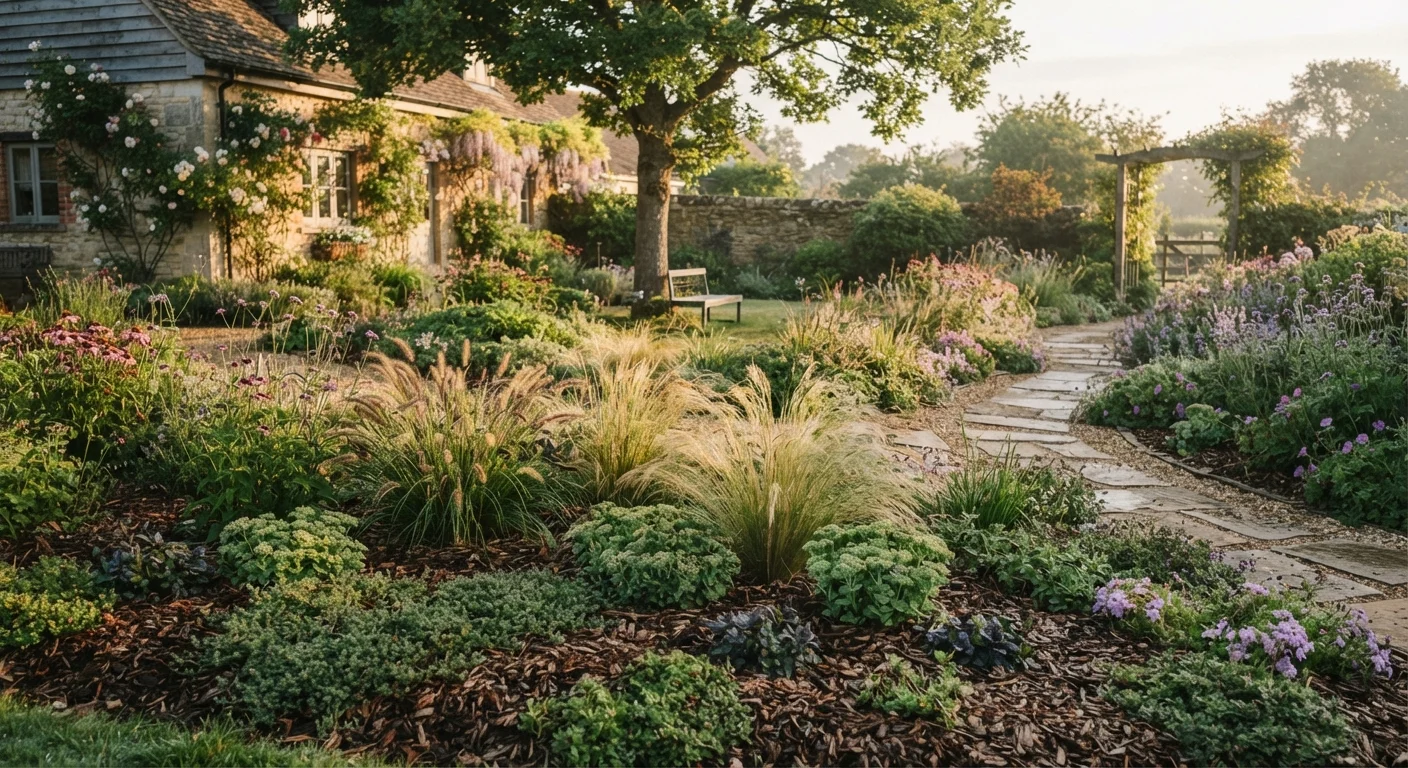
Why Most Gardens Become a Burden
Many gardeners find themselves locked in a cycle of constant weeding, watering, and patching - not because they're doing something wrong, but because the garden was never designed with maintenance in mind. A low-maintenance garden isn't a neglected one. It's a system built from the start to work with nature rather than against it.
The principles here apply whether you're starting from scratch or reworking an existing space. Small structural decisions - what you plant, where you plant it, and what goes between plants - compound over time into either a manageable landscape or an overwhelming one. Before diving into plant selection, it's worth checking whether you're working with any common misconceptions. Our guide on garden myths that waste time and effort covers several practices that add work without adding value.
Core Design Principles That Cut Ongoing Work
The most effective low-maintenance gardens share a handful of structural traits. Understanding them helps you make decisions that pay off for years.
Use ground cover plants to suppress weeds between larger specimens.
Bare soil is an open invitation for weeds. Dense ground covers like creeping thyme, sedums, or sweet woodruff shade the soil surface, reducing germination of weed seeds and cutting the time spent pulling them. They also reduce moisture loss from the soil.
Mulch beds to a depth of two to three inches each season.
Organic mulch - such as shredded bark or wood chips - suppresses weeds, retains soil moisture, and gradually improves soil structure as it breaks down. This reduces both watering frequency and weed removal over time.
Reduce or replace high-maintenance lawn areas with lower-effort alternatives.
Conventional turf grass requires consistent mowing, edging, fertilizing, and irrigation - often more than any other garden element. Replacing portions with hardscaping, meadow plantings, or low-growing ground covers can free up significant time.
Choose plants matched to your actual growing conditions, not your aspirations.
A plant placed in the wrong light, soil, or moisture conditions will struggle, invite pests, and demand constant attention. A plant suited to your conditions will establish quickly and require minimal intervention once settled.
Design beds with clean, simple edges that are easy to maintain.
Complex, curved borders with many tight angles require frequent re-edging to stay sharp. Gentle, flowing curves or straight edges are much quicker to maintain and look intentional even when slightly overgrown.
Grouping plants by water requirements - a practice sometimes called hydrozoning - also makes a real difference. When thirsty plants share a zone, you can water deeply and efficiently without over- or under-watering adjacent plants. For more on why watering habits matter, see watering routines that actually help.
Plant Selection: Where the Work Is Won or Lost
Choosing the right plants is the highest-leverage decision in low-maintenance gardening. A plant that's well-matched to your site - its soil type, drainage, sun exposure, and climate zone - will largely look after itself. One that isn't suited will require constant intervention.
“The single most important factor in plant performance is matching the plant to the place - not the other way around. Most maintenance problems are really placement problems.”
— Cooperative Extension Service, Land-grant university outreach network, United States
Native plants are a strong option for many US gardeners because they've evolved to thrive in local conditions without supplemental feeding or intensive watering once established. That said, they aren't a universal solution - site conditions and regional diversity matter. Our article native plants in the home garden offers a balanced look at where they shine and where they fall short.
Beyond natives, slow-growing perennials, ornamental grasses, and evergreen ground covers all reduce the frequency of replanting and seasonal swap-outs that add up to real labor over time.
A Note on 'Low Maintenance' Expectations
No garden is truly zero maintenance. Even the best-designed landscapes benefit from annual mulching, occasional pruning, and periodic assessment of what's thriving versus struggling. The goal is to minimize routine labor, not eliminate all effort. Setting realistic expectations helps you make design choices that genuinely reduce workload rather than just shift it.
Quick Changes With the Biggest Impact
Not every improvement requires a full redesign. Several targeted changes can meaningfully reduce workload without overhauling your entire garden.
When planning any layout changes near your home's perimeter, be mindful of how landscaping choices can affect your structure. Our guide on garden-to-house boundaries explains what to watch for before planting or paving close to foundations.
A low-maintenance garden takes more thought up front - but far less effort over the long run. The goal is a space you can enjoy without spending every weekend managing it.
30-50%
Reduction in watering when hydrozoning is applied
Cooperative Extension programs across the US commonly cite water savings of this range when plants with similar needs are grouped and irrigated together.
2-3 inches
Recommended mulch depth for weed suppression
University extension guidelines consistently recommend this depth range as effective for suppressing weeds while avoiding issues like root suffocation or moisture retention problems.
The content on this site is for informational purposes only and is not a substitute for professional advice. Always consult a qualified professional for guidance specific to your situation.