

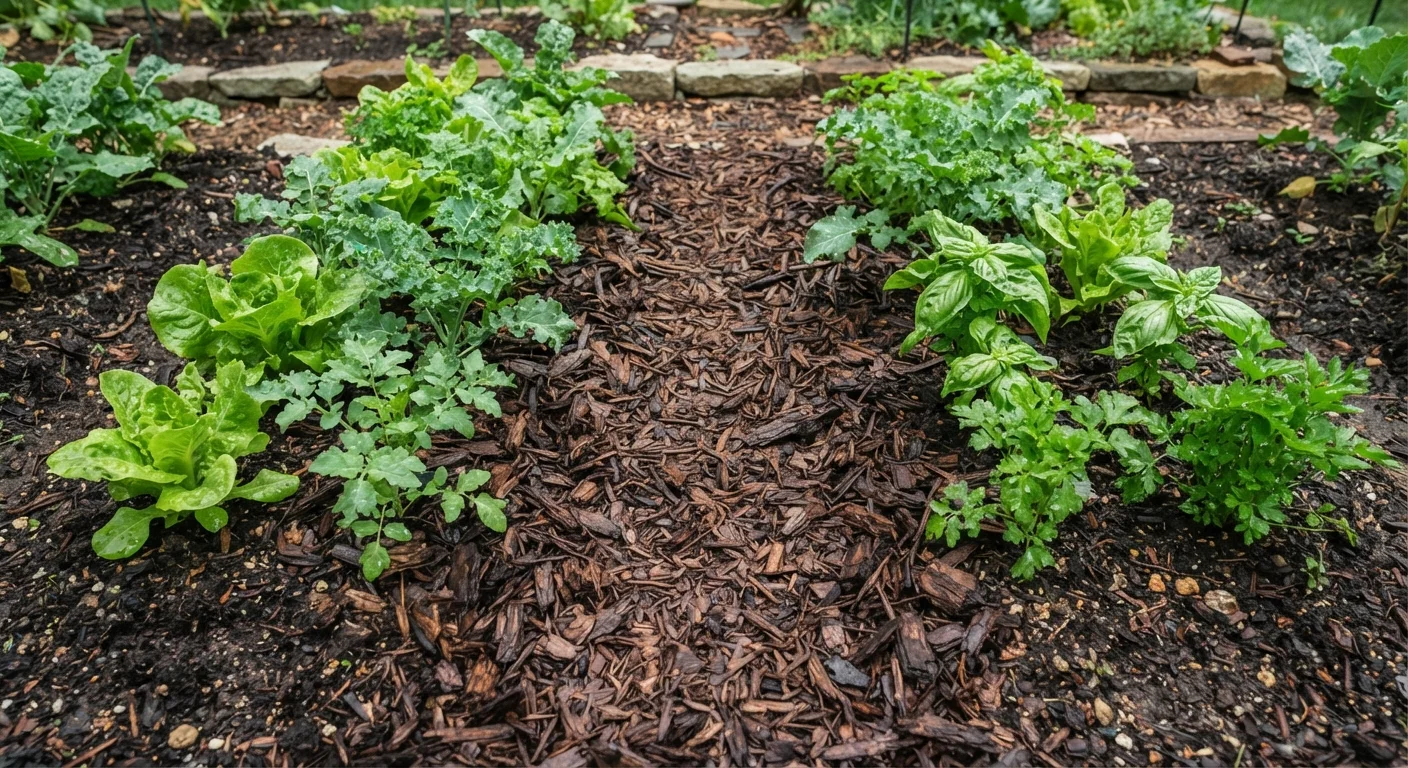
More Than a Finishing Touch
Many gardeners apply mulch because it makes beds look neat and finished. That's a reasonable motivation - but it undersells what's actually happening below the surface. Mulch functions as a working layer, actively changing the soil environment in ways that benefit plants throughout the season.
Understanding what mulch does mechanically helps you apply it more deliberately. It's not decorative filler - it's one of the simpler tools available for reducing garden labor while improving plant health. For a closer look at how different materials behave, see our guide on mulch types and what each one does.
~25-50%
Reduction in soil moisture loss
Research from university extension programs indicates mulched soil can lose significantly less moisture to evaporation compared to bare soil under similar conditions.
2-4 inches
Recommended mulch depth for most beds
This range is widely recommended by horticultural extension services as the practical sweet spot between effective suppression and avoiding moisture or airflow problems.
10°F+
Potential soil temperature reduction in summer
Mulched soil can remain measurably cooler than bare soil during hot periods, according to research published by cooperative extension horticulturalists.
How Mulch Holds Water in the Soil
Bare soil loses moisture quickly. Sun and wind drive evaporation from the surface, and in hot weather a garden bed can dry out within a day or two of watering. A mulch layer acts as a physical barrier between the soil and the atmosphere, slowing that evaporation considerably.
This means the soil stays moist longer after each rain or watering session - which reduces how often you need to water and makes that water go further. Pairing mulched beds with thoughtful watering habits amplifies these benefits. Our article on watering habits that do more harm than good explains the common mistakes worth avoiding.
Keep Mulch Away From Stems
Always leave a gap of 2-3 inches between your mulch layer and the base of any plant stem or tree trunk. Piling mulch directly against stems traps moisture and can encourage rot or invite pests. A ring-shaped application - sometimes called a "donut" rather than a "volcano" - is the right approach.
Temperature Regulation: Cooling Roots in Summer, Insulating in Winter
Soil temperature swings more dramatically without a surface covering. In summer, exposed dark soil can absorb enough heat to stress roots. In winter, the absence of insulation exposes roots to freeze-thaw cycles that can damage even established plants.
Mulch moderates both extremes. In summer it keeps the soil measurably cooler than bare ground by shielding it from direct sun. In fall and early winter, that same layer holds warmth longer, giving roots more time to harden off gradually. This is especially valuable for perennials and newly planted shrubs whose root systems haven't yet spread deep into more stable soil.
“Mulch is one of the best things you can apply to a garden. It improves the soil, it controls weeds, it conserves moisture, and it moderates temperature - all at once.”
— Linda Chalker-Scott, Extension Horticulturist, Washington State University
Weed Suppression Over Time
Weed seeds need light to germinate. A consistent mulch layer denies that light to seeds sitting at or near the soil surface, which is why mulched beds tend to have far fewer weeds than bare ones. The suppression isn't total - some established perennial weeds can push through - but it meaningfully reduces the workload.
The key word is consistent. Thin or patchy coverage leaves gaps where weeds establish readily. A 2-4 inch layer applied uniformly and replenished as it breaks down is more effective than a thick initial dump that's left to shrink and thin unevenly over time.
If you're exploring lower-maintenance garden strategies more broadly, designing a low-maintenance garden covers how mulch fits into a larger approach. Alternatively, ground cover plants offer a living alternative to mulch for some areas.
The Soil-Building Benefit of Organic Mulch
Wood chips, shredded bark, straw, and composted leaves do something inorganic materials cannot: they break down. As organic mulch decomposes, it contributes organic matter to the soil beneath, gradually improving structure, drainage, and the microbial communities that support plant health.
This process is slow - it happens over months and seasons - but it compounds. Gardens that have been mulched with organic material for several years often show noticeably improved soil compared to unmulched beds. If you're already composting at home, pairing that material with a mulch layer creates a meaningful soil-improvement cycle. Our composting guide walks through the basics of building and maintaining a compost pile.
This article is for general informational and educational purposes. Results from mulching practices will vary based on your local climate, soil type, plant selection, and application method.
Frequently Asked Questions
Most garden beds benefit from a 2-4 inch layer of mulch. Applying less than 2 inches often provides insufficient weed suppression, while going beyond 4 inches can trap excess moisture, restrict airflow to roots, and create conditions where pests or disease thrive.
No - keep mulch at least 2-3 inches away from plant stems and tree trunks. Direct contact can trap moisture against bark, encouraging rot and providing cover for pests. This practice is sometimes called avoiding the "mulch volcano" pattern.
Mulch suppresses weeds by blocking light that weed seeds need to germinate. It isn't a complete barrier - some persistent weeds will push through - but a consistent layer significantly reduces the number that establish.
Organic mulches break down over one to three seasons depending on material and climate. Check your beds each spring: if the layer has thinned below 2 inches, top it up. Inorganic mulches need refreshing far less often.
Applied correctly, mulch doesn't typically attract pests. However, overly thick layers or mulch piled against plant stems can create moist, sheltered conditions that some insects and fungal issues favor. Good application practices largely prevent these problems.
The content on this site is for informational purposes only and is not a substitute for professional advice. Always consult a qualified professional for guidance specific to your situation.