

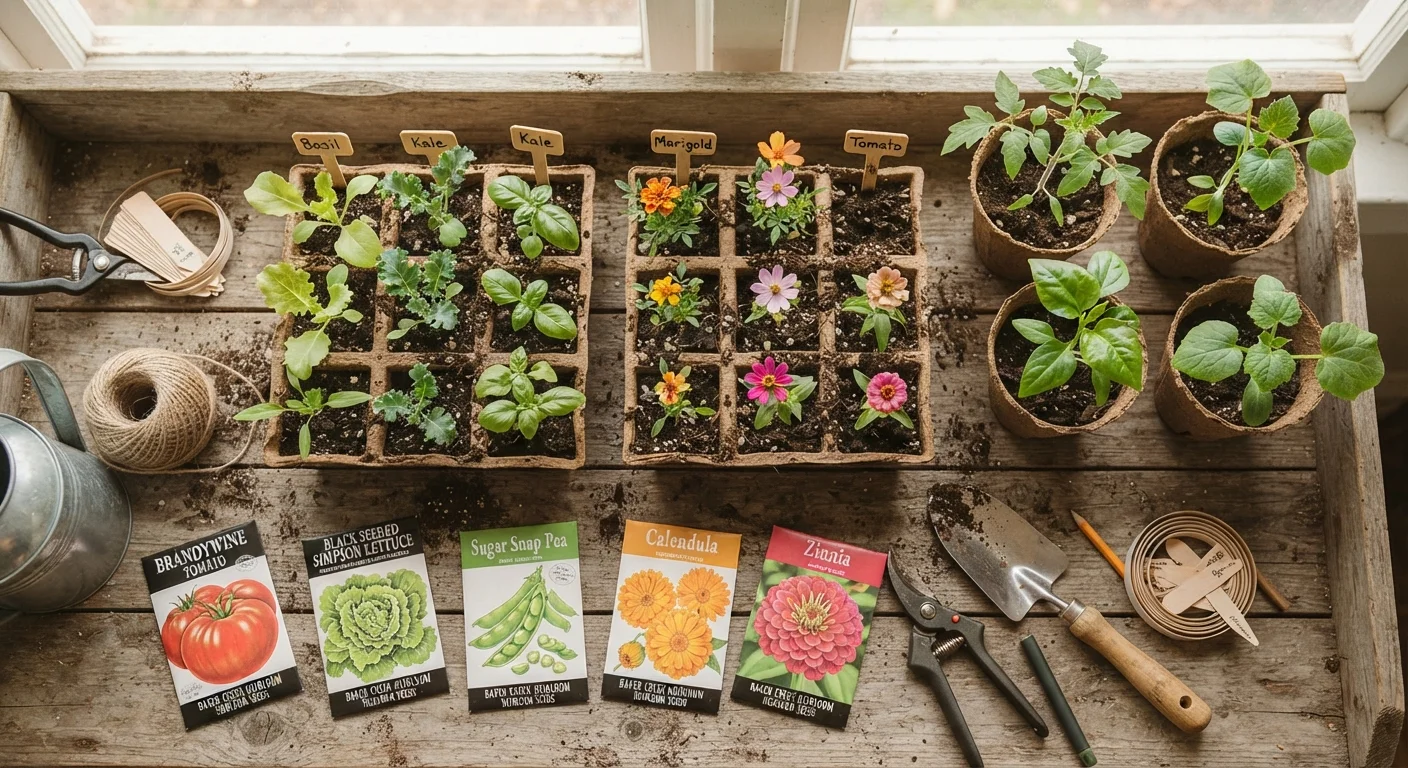
Option A
Starting from Seed
The patient, variety-rich approach.
Best for: Gardeners who want maximum plant variety, lower per-plant cost, and enjoy the full growing process from germination onward.
Option B
Buying Transplants
The time-saving, lower-risk option.
Best for: Busy gardeners, beginners, or anyone working with a short growing season who wants reliable results without an indoor seed-starting setup.
What Each Approach Actually Involves
Choosing between seeds and transplants isn't just about preference - it's a practical question that depends on your time, space, equipment, and what you're growing. Understanding what each method demands helps you plan before the season begins.
Starting from seed means beginning the process 4-10 weeks before your last frost date, depending on the crop. You'll need seed-starting mix (not regular potting soil), containers or trays, a reliable light source, and consistent warmth for germination. Seeds are then thinned, watered carefully, and eventually hardened off - gradually acclimated to outdoor conditions - before transplanting. It's a rewarding process, but it requires attention and the right setup.
Buying transplants means purchasing young plants from a nursery, garden center, or farmers market, typically already several weeks old. You skip germination and early seedling care entirely. Transplants are planted directly into the garden after your last frost date (or slightly before, for cold-tolerant crops). The trade-off is a narrower selection and higher per-plant cost compared to seeds.
For a broader look at getting your vegetable garden established from the ground up, see Starting a Vegetable Garden from Scratch.
| Criterion | Starting from Seed | Buying Transplants |
|---|---|---|
| Cost per plant | Very low (cents per seed) | Higher ($1-$5+ per start) |
| Variety selection | Hundreds of options via catalogs | Limited to nursery stock |
| Time to garden-ready | 4-10 weeks of indoor growing | Ready to plant immediately |
| Equipment needed | Trays, grow lights, heat mats | Minimal - just a trowel |
| Risk of failure | Higher (germination not guaranteed) | Lower (plants are established) |
| Best for root crops | Yes - direct sow only | No - transplanting harms roots |
| Suitable for beginners | Moderate learning curve | Very beginner-friendly |
Crops That Favor Each Method
Not every plant is equally suited to both approaches. Understanding which crops prefer direct seeding versus transplanting can save a lot of frustration.
Crops better started from seed (direct sown)
- Root vegetables - carrots, beets, turnips, radishes, and parsnips develop a taproot that is easily damaged by transplanting. Sow these directly into prepared garden soil.
- Fast-maturing crops - beans, peas, corn, and cucumbers grow quickly enough that starting them indoors offers little advantage and can actually disrupt establishment.
- Greens and herbs - lettuce, spinach, dill, and cilantro are easy to direct sow and often bolt (go to seed prematurely) if disturbed at the root.
Crops that benefit from transplanting
- Long-season fruiting crops - tomatoes, peppers, and eggplant need 60-90 days or more to mature. Starting or buying transplants gives them the head start they need in most US climates.
- Brassicas - broccoli, cauliflower, and cabbage are often started indoors or purchased as transplants to hit optimal cool-season windows without requiring an earlier outdoor sowing.
4-10 weeks
Indoor lead time needed for seeds
Most warm-season crops like tomatoes and peppers require 6-10 weeks indoors before transplanting, while cool-season crops may need only 4-6 weeks.
Hundreds
Tomato varieties available by seed
Mainstream garden centers typically stock a handful of tomato varieties; seed catalogs commonly list well over 100 distinct cultivars for home growers.
Direct sow
Only viable method for root vegetables
University extension services widely recommend direct sowing for carrots, beets, parsnips, and radishes, as transplant shock disrupts taproot development.
If you're weighing how your garden layout will affect these decisions, Raised Beds vs. In-Ground Planting covers how bed type can influence crop choices.
Combining Both Methods: A Practical Strategy
Many experienced gardeners use both approaches within the same season - and for good reason. A combined strategy lets you capture the cost and variety advantages of seeds while relying on transplants for crops where timing matters most.
A common approach: purchase transplants for tomatoes, peppers, and brassicas, then direct sow beans, peas, carrots, and salad greens once the soil has warmed. This splits the workload across the season and reduces your dependence on a full indoor seed-starting setup.
Hardening Off: A Step You Can't Skip
Whether you start your own seeds or buy transplants grown in a greenhouse, plants need a hardening-off period before they live outdoors full time. Set them outside in a sheltered spot for a few hours each day, gradually increasing exposure over 7-10 days. Skipping this step can lead to wilting or stunted growth even in healthy, well-grown starts.
If you're new to vegetable gardening generally, Your First Vegetable Garden walks through every stage, from choosing a plot to your first harvest - and helps you decide which crops suit a beginner's schedule.
The content on this site is for informational purposes only and is not a substitute for professional advice. Always consult a qualified professional for guidance specific to your situation.