

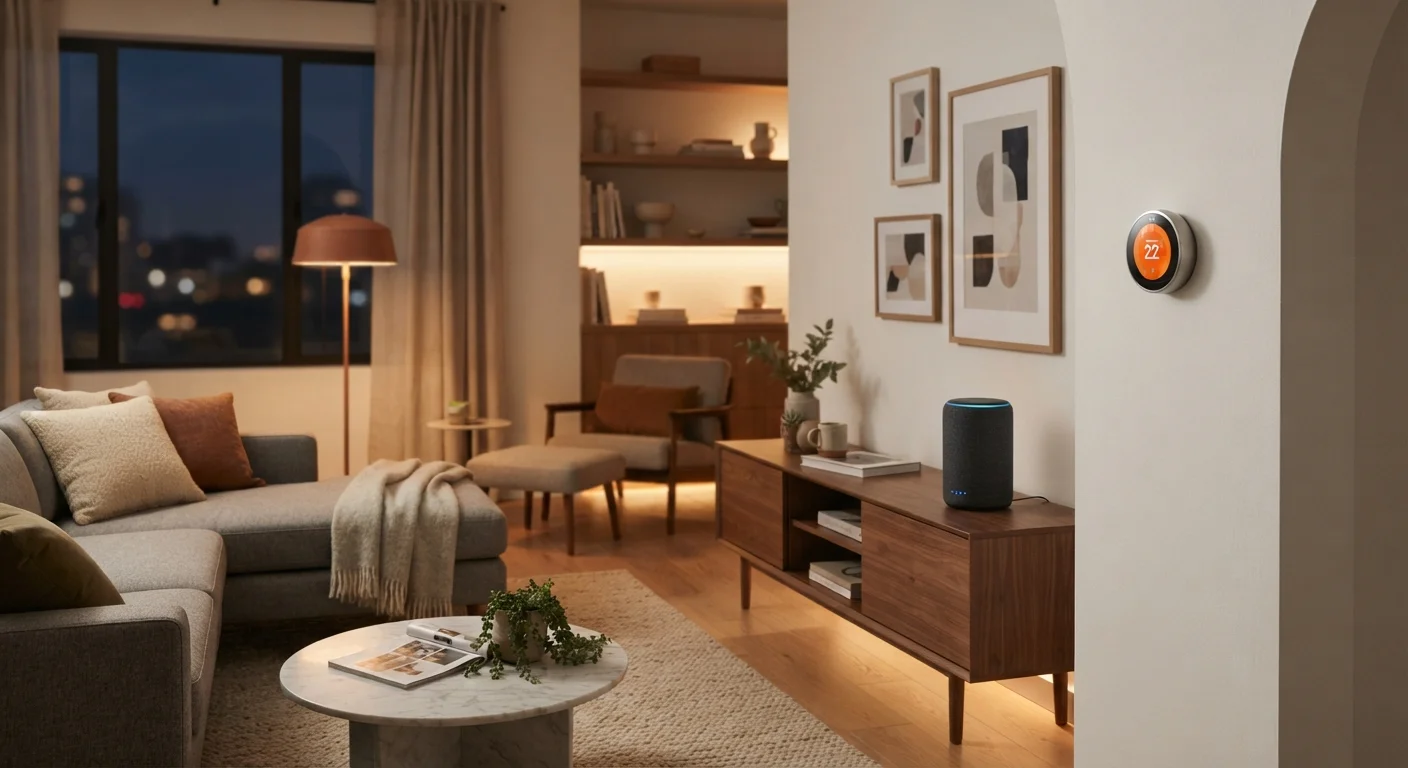
Our Verdict
Smart home devices offer real, tangible benefits - automated routines, remote access, and energy efficiency - but they come with genuine friction points around compatibility, privacy, and technical upkeep. The payoff is highest when devices are chosen thoughtfully and expectations are grounded in the actual setup effort involved.
Smart home tech is best suited to consumers who are comfortable with occasional troubleshooting, value automation and convenience, and are willing to spend time on initial configuration.
What Smart Home Devices Actually Do
Smart home devices are internet-connected gadgets that let you monitor, control, or automate functions in your home - typically from a smartphone app or through voice commands. The category spans a wide range: smart thermostats, lighting systems, door locks, security cameras, video doorbells, plugs, and appliances.
Most work by connecting to your home Wi-Fi network and communicating with a companion app or a central hub (like a smart speaker or a dedicated controller). Some devices also work with voice assistants, letting you adjust settings hands-free. For a broader look at how these gadgets fit into your overall device setup, see our guide to everyday consumer devices.
Understanding what these devices do - and what they need to function - is the first step to deciding whether they belong in your home.
The Real Advantages
At their best, smart home devices deliver genuine quality-of-life improvements that go beyond novelty.
Automation reduces repetitive daily tasks
Scheduled routines - lights that dim at bedtime, thermostats that adjust before you wake - run without manual input once configured.
Remote monitoring and control from anywhere
Check door locks, security cameras, or appliance status from your phone, whether you're at work or traveling.
Potential energy savings over time
Smart thermostats and lighting systems can reduce energy waste by responding to occupancy and habits rather than fixed schedules.
Accessibility benefits for diverse households
Voice control and remote operation can support people with mobility challenges, making everyday tasks significantly easier.
Gradual, modular setup possible
You can start with a single device and expand incrementally, rather than committing to a full-system overhaul all at once.
Automation is where the value compounds. A thermostat that learns your schedule can reduce heating and cooling costs without any ongoing effort. Lighting that responds to motion means no more rooms left lit when no one is in them. For households with young children, older adults, or people with mobility limitations, voice-controlled or remotely operated devices can meaningfully expand independence and ease.
Remote access is another underappreciated benefit. Being able to check whether you locked the front door - or actually lock it - from across town is a practical convenience, not a gimmick.
Where the Friction Hides
The frustrations with smart home devices are real and worth understanding before you commit to a setup.
Cross-brand compatibility is often inconsistent
Devices from different manufacturers may not integrate reliably, requiring workarounds or limiting which features actually function together.
Setup can be time-consuming and technical
Initial configuration, app accounts, firmware updates, and network settings create a meaningful barrier for less tech-confident users.
Dependence on cloud services introduces fragility
If a manufacturer discontinues a product line or shuts down its cloud infrastructure, connected devices can lose key features or stop working entirely.
Data collection and privacy trade-offs
Most smart devices send usage data to manufacturer servers; privacy policies vary widely and aren't always easy to interpret.
Wi-Fi reliability directly affects device performance
Smart devices are only as dependable as the home network they run on - weak or congested Wi-Fi leads to delayed responses or dropped connections.
Ongoing costs can add up
Some devices require paid subscriptions for full functionality, such as cloud video storage for security cameras or advanced automation features.
Compatibility is probably the most common pain point. Devices from different manufacturers don't always talk to each other reliably, even when they claim to support the same standard. The Matter protocol (a newer cross-brand connectivity standard backed by major players in the industry) is designed to address this, but adoption is still uneven across the market. For a deeper look at why ecosystem alignment matters, see our breakdown of single-ecosystem trade-offs.
Wi-Fi dependency is another hidden friction point. Smart devices are only as reliable as your home network. If your router struggles with range or congestion, your devices will too. Understanding wired vs. wireless trade-offs can help you assess whether your network is ready.
The Matter Standard: What It Means for You
Matter is an industry-backed protocol designed to let smart home devices from different brands work together more reliably. It's supported by many major manufacturers, but not all existing devices are compatible - and not all Matter-certified devices support every feature across platforms. If cross-brand compatibility is a priority, checking for Matter support before purchasing is worth the extra step.
Privacy and Data: What You Should Know
Smart home devices collect data - that's largely how they work. A thermostat learns your schedule. A camera stores footage. A voice assistant processes audio clips. What happens to that data depends on the manufacturer's privacy policies, which vary significantly and can change over time.
This doesn't mean smart devices are inherently unsafe, but it does mean they warrant the same scrutiny you'd apply to any internet-connected service. Key questions to ask: Does the device store data locally or only in the cloud? Can you opt out of data sharing? What happens to your data if the company changes ownership or shuts down a service?
Households where multiple people use shared devices face an additional layer of consideration around account access and permissions - something explored in more detail in our article on personal devices shared across a household.
69%
US adults with at least one smart home device
According to Statista consumer survey data, a significant majority of US households have adopted at least one connected home device.
~30%
Smart home owners reporting compatibility issues
Industry research consistently shows that interoperability between devices from different brands is among the top frustrations cited by smart home users.
Building a Smart Home That Actually Works
The most common mistake first-time buyers make is purchasing too many devices at once without a clear plan. A more effective approach is to start with one or two devices that solve a specific, real problem in your home - then expand once you understand how they behave on your network and within your preferred platform.
Think through the full picture before buying: Does this device require a subscription after the initial purchase? What happens if the manufacturer discontinues cloud support? Is it compatible with the other devices you already own? For a comprehensive view of how personal devices fit together across your home, this end-to-end overview is a useful reference.
Smart home technology works best when it's tailored to how your household actually lives - not to what looks impressive in a showroom.
The content on this site is for informational purposes only and is not a substitute for professional advice. Always consult a qualified professional for guidance specific to your situation.