

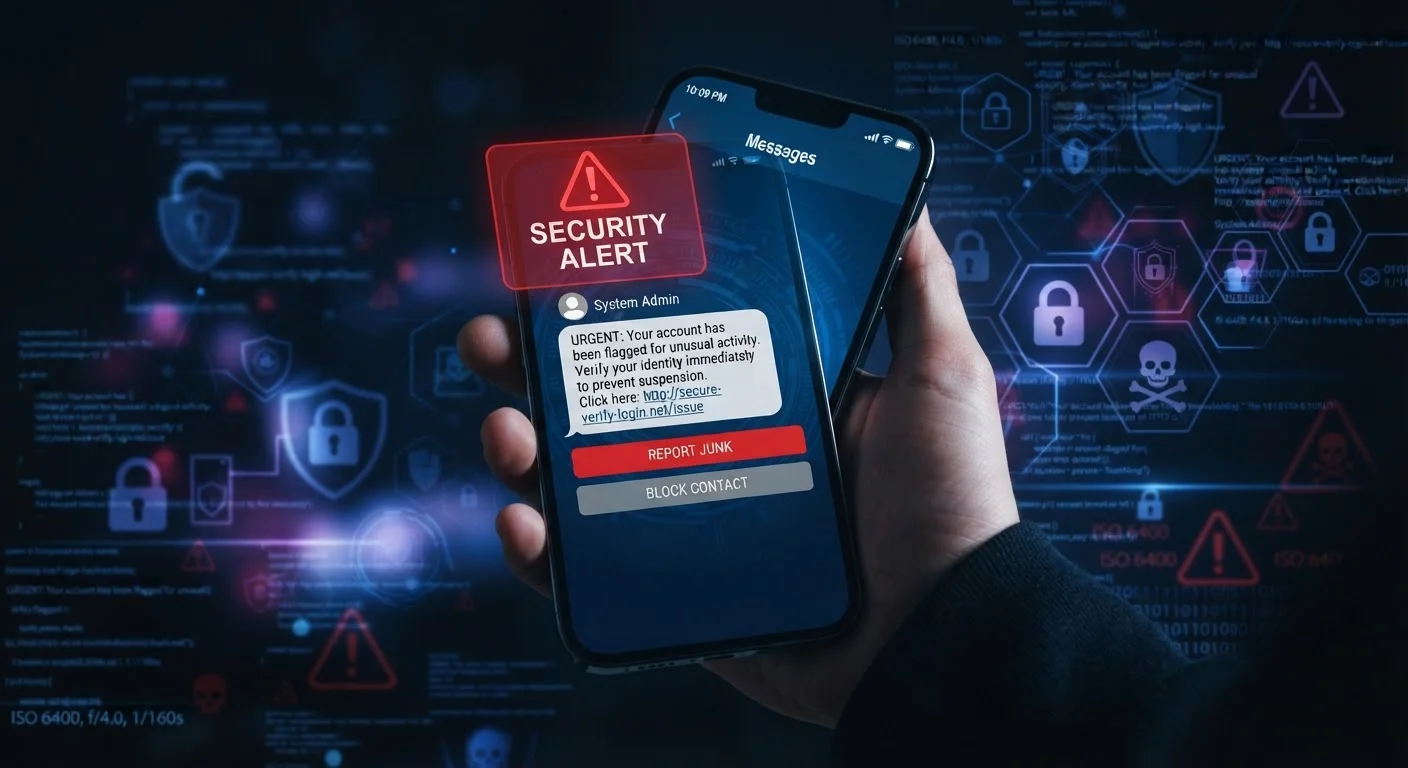
Three Channels, One Goal
Scammers don't rely on a single trick. They use whichever communication channel gives them the best chance of catching you off guard - your email inbox, your text messages, or a phone call. Understanding how each channel works helps you recognize an attack before you act on it.
| Phishing channel | |
| Smishing channel | SMS text message |
| Vishing channel | Voice phone call |
| Common impersonation targets | Banks, IRS, Social Security Administration, package carriers, tech support |
| Key manipulation tactic | Urgency and fear to prompt fast, unthinking action |
| Primary defense | Verify independently before clicking, calling back, or sharing any information |
All three methods - phishing, smishing, and vishing - rely on the same core strategy: impersonating a trusted source to pressure you into giving up personal information or money. The variation is the delivery medium, not the underlying manipulation. See our detailed breakdown of how each scam works for channel-specific examples.
Phishing: Email-Based Deception
Phishing arrives in your email inbox, often disguised as a message from a bank, government agency, retailer, or technology platform. The sender's display name may look legitimate, but the underlying email address rarely matches the real organization.
Common phishing hallmarks include:
- A sense of urgency - "Your account will be closed in 24 hours"
- A link that leads to a fake login page designed to capture your credentials
- Requests for personal details such as your Social Security number, password, or payment card number
- Generic greetings like "Dear Customer" rather than your actual name
Spear phishing is a targeted variant where attackers use personal details gathered from social media or data breaches to make the message feel convincingly specific to you. This raises the stakes and the deception quality considerably.
Phishing
A scam delivered via email that impersonates a trusted organization to steal personal information or login credentials. The term comes from the idea of 'fishing' for victims using deceptive bait.
Smishing
A phishing attack carried out through SMS text messages. Smishing messages typically include a link to a fraudulent website or ask the recipient to call a fake number.
Vishing
Voice phishing - a scam conducted over the phone where the caller impersonates a legitimate institution. Vishing often uses caller ID spoofing to appear credible.
Caller ID Spoofing
A technique that lets scammers display a false phone number on the recipient's caller ID, making a call appear to come from a trusted source such as a bank or government agency.
Spear Phishing
A highly targeted form of phishing where attackers use personally identifiable details - gathered from social media or data breaches - to craft convincing, individualized deceptive messages.
Social Engineering
The use of psychological manipulation rather than technical hacking to trick people into revealing confidential information or taking harmful actions. All three scam types rely on social engineering.
Smishing: Scams by Text Message
Smishing (SMS + phishing) uses text messages to deliver the same types of lures. Texts feel more immediate and personal than email, which is partly why smishing success rates concern security researchers. People are conditioned to respond to texts quickly and may not scrutinize them as carefully.
Typical smishing scenarios include fake package delivery notifications, false bank fraud alerts, and fabricated government benefit messages. Each message typically contains a short link - often using a URL shortener - that redirects to a fraudulent site.
URL Shorteners Are a Common Red Flag
Smishing messages frequently use shortened URLs (such as bit.ly-style links) that hide the real destination. A legitimate organization almost never needs to mask where its link leads. If you can't see the full web address before tapping, treat the message with extra caution. You can paste a shortened link into a URL expander tool on a desktop browser to preview the destination before visiting it.
Before tapping any link in an unsolicited text, ask yourself: Did I initiate this interaction? Can I verify the sender by contacting the organization directly through a number I already have? If the answer to either question is uncertain, don't tap the link.
Vishing: Voice-Based Social Engineering
Vishing (voice + phishing) happens over the phone. Callers impersonate the IRS, Social Security Administration, your bank's fraud department, or technical support teams. Caller ID spoofing technology lets scammers display a legitimate-looking phone number, making the call harder to dismiss at first glance.
Vishing attacks rely heavily on emotional pressure - fear that your account has been compromised, that you owe back taxes, or that a grandchild is in legal trouble. Scammers create urgency so you act before you think.
Key defensive habits include: hanging up and calling the organization back using an official number from their website, never reading back a one-time code to a caller, and remembering that government agencies such as the IRS typically initiate contact by mail, not phone.
For broader strategies that apply across all your devices and accounts, see our guide on keeping your devices secure. If you travel frequently, the risks extend beyond home networks - our article on digital security while travelling covers the unique threats you may encounter on the road.
The content on this site is for informational purposes only and is not a substitute for professional advice. Always consult a qualified professional for guidance specific to your situation.