

Start here
What Portland Actually Looks Like on the Ground
Next
The Neighborhoods Worth Knowing Before You Arrive
Then
Getting Around: What Works and What Doesn't
Explore deeper
Food, Nature, and What Portland Does Genuinely Well
Before you go
Honest Considerations Before You Book
What Portland Actually Looks Like on the Ground
Portland has accumulated a lot of mythology - some flattering, some unflattering - and much of it lands somewhere between exaggeration and misreading. Travelers who arrive expecting either a progressive utopia or a city in collapse tend to find something more complicated and, ultimately, more interesting.
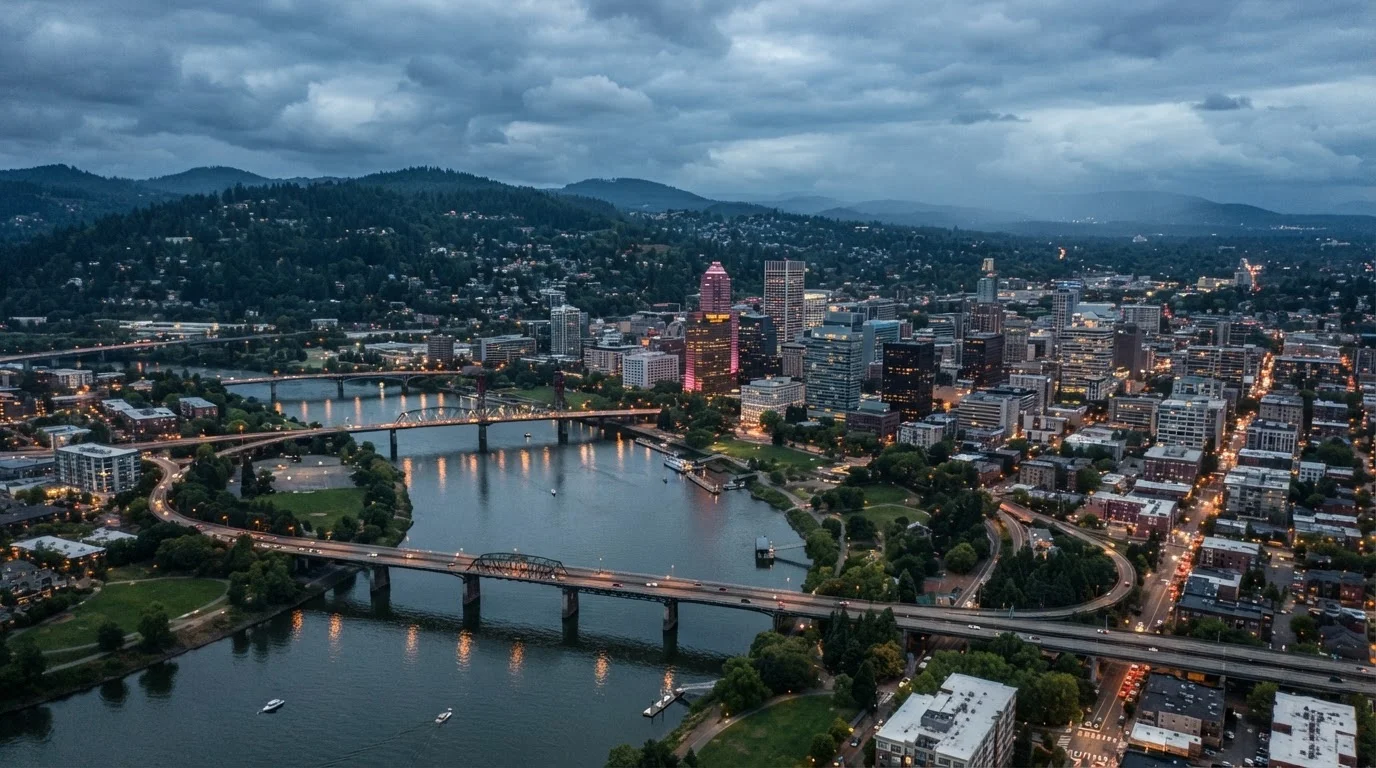
At its core, Portland is a mid-sized Pacific Northwest city of roughly 650,000 people, built around the Willamette River, hemmed in by the West Hills, and connected by a modest but functional network of bridges. It is notably greener and more compact than many American cities its size. The skyline is low. The streets in residential areas are often lined with mature Douglas firs and craftsman houses. Much of the city moves at a pace that feels deliberately unhurried.
The social challenges Portland faces - visible homelessness, ongoing debates about public safety and city services - are real and not something a responsible travel guide should gloss over. These conditions vary considerably from block to block and neighborhood to neighborhood, and they are worth understanding before you arrive rather than encountering as a surprise. As with cities like New Orleans, the full picture of Portland is more layered than its loudest reputation suggests.
Food cart pod
A curated cluster of food carts sharing a common outdoor space, often with shared seating. Portland has dozens of these spread across the city.
MAX light rail
Portland's metropolitan light rail network, operated by TriMet, connecting the airport and outer suburbs to the downtown core.
Forest Park
One of the largest urban forests in the United States, located within Portland city limits and offering extensive hiking and trail running access.
Columbia River Gorge
A dramatic river canyon east of Portland along the Oregon-Washington border, known for waterfalls, hiking, and wind sports.
Pearl District
A redeveloped warehouse neighborhood in northwest Portland, now home to galleries, restaurants, and Powell's Books.
The Neighborhoods Worth Knowing Before You Arrive
Portland is essentially a city of distinct neighborhoods, and which ones you spend time in shapes the entire experience. The Pearl District, immediately northwest of downtown, is polished, walkable, and home to Powell's Books - an independent bookshop occupying an entire city block that has become something of a civic institution. It's a reliable starting point for first-time visitors.
Across the river, the east side tells a different story. Division Street and the surrounding Foster-Powell area offer a dense, eclectic stretch of restaurants and cafés that reflect the independent spirit the city is genuinely known for. Further north, the Alberta Arts District has a strong neighborhood character, with galleries, murals, and a monthly art walk that draws locals and visitors alike.
Hawthorne Boulevard runs through a neighborhood that feels like a more lived-in version of Portland's counterculture identity - vintage shops, bookstores, and coffee spots that aren't performing quirkiness so much as embodying it naturally.
Let Neighborhoods Guide Your Itinerary
Rather than building a list of landmarks, consider anchoring each day of your visit to a different Portland neighborhood. Walk its main commercial street, find a coffee spot, and let the itinerary fill in naturally. This approach surfaces the city's character far better than a conventional checklist approach.
Getting Around: What Works and What Doesn't
Portland's MAX light rail system is genuinely useful for moving between the airport, downtown, and several key neighborhoods. It's clean, runs frequently during peak hours, and requires no special knowledge to navigate. The city's bus network fills in the gaps, though outer eastside routes can feel slow and infrequent.
Cycling infrastructure is extensive by American standards, and many visitors find a bike - available through local ride-share programs - the fastest and most enjoyable way to move across flat stretches of the east side. Walking works well in most commercial neighborhoods, though distances between neighborhoods can be longer than they appear on a map.
For day trips, public transit has limits. The Columbia River Gorge, Hood River, and the Oregon Coast - all within reasonable striking distance - are much more accessible with a rental car. If you're considering extending your trip westward, the Oregon Coast rewards a slower approach that's difficult to pull off without your own wheels.
Food, Nature, and What Portland Does Genuinely Well
Portland's food cart scene is one of the city's most authentic draws. Organized into pods scattered across the city, these carts offer an unusually wide range of cuisines at accessible prices - from Laotian to Peruvian to Ethiopian - and eating your way through a cart pod is a genuinely good use of a lunch hour. The sit-down restaurant scene skews toward locally sourced, seasonally driven menus, and the coffee culture runs deep enough that even a casual morning walk tends to surface excellent independent cafés.
Nature is never far away. Forest Park - a 5,100-acre urban forest on the city's western edge - offers more than 80 miles of hiking trails accessible directly from Portland neighborhoods. The Columbia River Gorge, about 30 miles east, delivers dramatic waterfall hikes and river views that feel a world removed from the city. This kind of proximity to serious outdoor terrain is a legitimate and underappreciated part of what makes Portland worth visiting.
For readers who enjoy doing thorough pre-trip research before arriving anywhere, Portland rewards that investment - it's a city with enough layers that preparation pays off.
Seasonal Access to Natural Attractions
Some of the most popular trails in the Columbia River Gorge and around Mount Hood are subject to seasonal closures due to snow, fire damage, or permit requirements. Before planning hikes, check the relevant land management agency's website - typically the US Forest Service or Oregon State Parks - for current access and permit information.
Honest Considerations Before You Book
Rain is a genuine factor. Portland's wet season runs roughly from October through May, and during that stretch, grey skies and drizzle are the norm rather than the exception. This isn't a reason to avoid Portland in the shoulder seasons - the city is beautiful in muted autumn light, and crowds thin considerably - but it does require packing accordingly and adjusting expectations around outdoor plans.
First-time visitors sometimes expect Portland to feel more like Seattle or San Francisco than it does. It's smaller, quieter, and in some ways rougher around the edges. Travelers who appreciate cities like Nashville - where the real character lives in the neighborhoods rather than a single tourist corridor - tend to connect with Portland well. Those who want polished, resort-style urban tourism may find it doesn't fit the mold.
What Portland offers, at its best, is a city that feels genuinely inhabited - with a strong local identity, remarkable natural access, and a food and culture scene that didn't emerge from a marketing plan. That's not nothing, and for the right traveler, it's more than enough.
Don't Rely Solely on Online Impressions
Portland has been the subject of intense and often polarized coverage in national media. Neither the boosterish nor the alarmist framing tends to match what most visitors experience. Checking current traveler forums and official city resources - rather than relying on older headlines - gives a more accurate picture of conditions on the ground.
Frequently Asked Questions
Like most mid-sized American cities, safety in Portland varies significantly by neighborhood and time of day. Most tourist-frequented areas - the Pearl District, Hawthorne, Alberta Arts District - are generally busy and well-trafficked. Travelers should exercise the same awareness they would in any urban environment, and verify current conditions through reliable sources before traveling.
Late June through September offers the most reliable dry weather, with warm temperatures and long daylight hours. Spring and fall bring lush greenery but also frequent rain. Winter visits are possible and often less crowded, but expect grey skies and cooler temperatures most days.
For most visitors staying in central Portland, a car is not required. The MAX light rail, buses, and cycling infrastructure cover much of the city. However, a car becomes useful if you plan day trips to the Columbia River Gorge or the Oregon Coast.
Portland has a strong identity around independent bookshops, coffee culture, food carts, outdoor recreation, and local craft brewing. It also has a well-known counterculture streak and a reputation for progressive politics that shapes the city's character in visible ways.
Three to four days gives you enough time to explore several neighborhoods, enjoy the food scene, and make at least one day trip. Visitors who linger tend to appreciate the city more - it rewards slow exploration over rushed sightseeing.
Portland offers a different texture than Seattle or Vancouver - smaller in scale, quirkier in character, and easier to navigate on foot. It suits travelers who enjoy urban neighborhoods, independent culture, and proximity to dramatic natural landscapes.
The content on this site is for informational purposes only and is not a substitute for professional advice. Always consult a qualified professional for guidance specific to your situation.