

Start here
What Downtown Broadway Is Actually Like
Next
The Neighborhoods Worth Exploring
Then
Nashville's Food Scene Beyond Hot Chicken
Dig deeper
History, Culture, and Unexpected Museums
When you're ready
Day Trips and Getting Out of the City
Before you book
Practical Things to Know Before You Go
What Downtown Broadway Is Actually Like
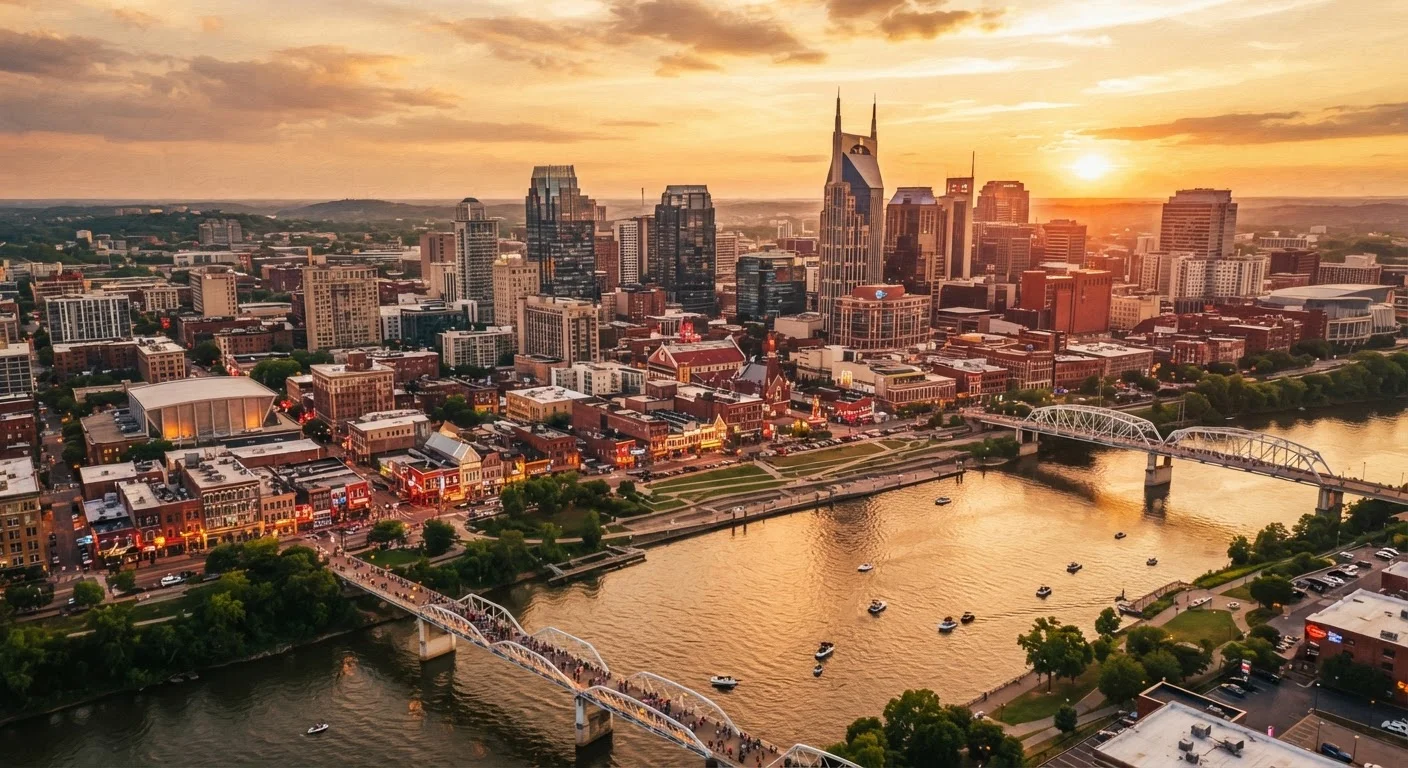
Lower Broadway - the strip of neon-lit honky-tonks running toward the Cumberland River - is loud, crowded, and genuinely fun for a few hours. Live bands play across multiple floors of bars all day, and the energy is hard to replicate anywhere else. But it is also, by design, a tourist corridor, and anyone who spends their entire Nashville trip within earshot of it will leave with an incomplete picture of the city.
Daytime on Broadway is manageable and even enjoyable for people who aren't drawn to the nightlife version. The stretch around Ryman Auditorium - the original home of the Grand Ole Opry and one of the most acoustically revered music venues in the country - rewards a slower walk. Nearby, the Country Music Hall of Fame and Museum offers more depth than its name suggests, with rotating exhibits that connect Nashville's musical history to broader American cultural shifts.
Broadway Is Only One Evening
Most experienced Nashville visitors suggest giving Broadway one evening - ideally a weeknight - and treating it as one chapter rather than the whole story. The strip is genuinely entertaining, but its crowds and noise can be overwhelming if it becomes your default anchor for the trip.
By evening, especially on weekends, the crowds and noise on Broadway intensify significantly. If you're sensitive to loud environments or visiting with young children, a weekday afternoon visit gives you a feel for the area with considerably less chaos.
The Neighborhoods Worth Exploring
Nashville's neighborhoods are where the city earns a more nuanced reputation. 12South is a walkable stretch of independently owned shops, coffee spots, and restaurants along a tree-lined street in south Nashville - the kind of neighborhood that feels lived-in rather than manufactured. Germantown, just north of downtown, is one of Nashville's oldest neighborhoods and has developed a serious restaurant and architecture scene while retaining its historic character.
East Nashville has long attracted artists, musicians, and longtime locals who wanted distance from Broadway's orbit. It's where you find craft cocktail bars in converted bungalows, record stores with genuine curation, and weekend farmers markets. The Five Points intersection anchors much of its social life.
The Gulch is newer and more polished - a former industrial area redeveloped into a walkable urban neighborhood with a well-known mural that draws constant foot traffic. It's worth a walk-through, though it skews more toward newer residents and hotel visitors than deep local culture.
For a comparable approach to reading a city through its neighborhoods rather than its tourist corridors, the New Orleans neighborhood guide offers a useful frame of reference.
Give Each Neighborhood a Half-Day
Nashville's neighborhoods are close enough that it's tempting to rush through all of them in one day. Resist the urge. Spending a genuine half-day in a single area - having a meal, walking the side streets, finding a coffee shop - gives you a far more honest feel for the city than a 30-minute drive-by of each.
Nashville's Food Scene Beyond Hot Chicken
Hot chicken - the spiced, crispy, deeply cayenne-forward dish that originated in Nashville - is worth trying at least once, and several long-standing spots do it exceptionally well. But building a food itinerary around it alone would be like visiting New Orleans and only eating beignets.
Nashville has developed a serious dining culture over the past decade, with a particular strength in Southern-influenced cooking that draws on Appalachian, Gulf Coast, and global traditions. The Germantown and 12South corridors have clusters of chef-driven restaurants worth planning a meal around. The city also has a growing presence of international cuisines - particularly Mexican, Vietnamese, and West African - concentrated in areas that don't make it onto most tourist maps but are well worth seeking out.
The Nashville Farmers Market, operating near the Bicentennial Capitol Mall, is a good low-key stop for anyone interested in local producers and a more everyday version of the city's food culture.
History, Culture, and Unexpected Museums
Nashville holds more historical weight than its party-city reputation implies. The National Museum of African American Music, which opened in 2021, tells the story of Black musical traditions across genres in a way that's both technically impressive and emotionally grounding. It sits just off Broadway but occupies a very different emotional register than the surrounding entertainment district.
The Frist Art Museum occupies a restored 1930s Art Deco post office building and presents rotating exhibitions from major collections alongside regional artists - a genuinely strong museum that surprises many visitors unfamiliar with Nashville's visual arts scene. The Tennessee State Museum, free to visit, covers the state's history from Indigenous peoples through the Civil War and Reconstruction with considerable depth.
Lower Broadway
The main tourist strip in downtown Nashville, lined with multi-story bars featuring live country and rock music throughout the day and night. Often called the honky-tonk highway.
Honky-tonk
A type of bar or dance hall associated with country music, typically casual and lively. In Nashville, the term refers specifically to the live-music bars concentrated on Broadway.
Hot Chicken
A Nashville culinary tradition: bone-in fried chicken coated with a spiced paste, typically cayenne-heavy, served on white bread with pickles. Ranges widely in heat level.
Grand Ole Opry
A long-running country music radio program and live performance institution, originally broadcast from the Ryman Auditorium. It remains one of Nashville's most iconic cultural landmarks.
Natchez Trace Parkway
A federally managed scenic road running roughly 444 miles from Nashville southwest to Natchez, Mississippi, following a historic travel route used for centuries.
Five Points
An intersection in East Nashville that serves as the informal center of the neighborhood's social and commercial life, with restaurants, bars, and small businesses clustered nearby.
If your visit extends to the broader region, the Great Smoky Mountains orientation guide provides useful context for one of the most historically layered landscapes within a few hours' drive.
Day Trips and Getting Out of the City
Franklin, about 20 miles south of downtown, is one of the more rewarding half-day escapes from Nashville. It has a well-preserved Civil War battlefield, a compact historic downtown, and a slower pace that contrasts usefully with the city. The Carter House and Carnton, two sites tied to the 1864 Battle of Franklin, are among the most significant and least-crowded Civil War sites in Tennessee.
The Natchez Trace Parkway - a scenic federal road tracing an ancient travel corridor - begins (or ends, depending on direction) just southwest of Nashville and offers some of the most unhurried driving in the Southeast. Even a short stretch of it, into the rolling Tennessee countryside, gives a very different impression of the region.
For travelers considering extending their trip east, the quieter corners of the Smoky Mountains are roughly three to four hours away and reward visitors willing to look past the more commercial gateways.
Practical Things to Know Before You Go
Nashville is served by Nashville International Airport (BNA), which sits about 10 miles from downtown and is well-connected with direct flights from most major US cities. Rideshare services are widely available from the airport and throughout the city.
The city is car-friendly by design, and most attractions beyond the downtown core are easier to reach with a vehicle. Walking is realistic within individual neighborhoods but less practical across them. Rideshare apps fill the gap reasonably well.
Accommodations range from large downtown hotels near Broadway to smaller properties in 12South, East Nashville, and Midtown. Staying outside the immediate Broadway area often means a quieter experience and - depending on the season - potentially more value.
Nashville hosts major events throughout the year, including the CMA Fest in June, which draws enormous crowds and significantly affects hotel availability and pricing. Verifying event calendars before booking is worthwhile if you have flexibility on dates. For travelers who enjoy seeing how different cities handle their tourist identity, the Nashville beyond Broadway guide explores the city's cultural layers in further detail.
Book Early During Major Events
Nashville hosts several large-scale events - particularly in late spring and summer - that can effectively sell out the city's accommodations weeks in advance. If your travel dates coincide with CMA Fest or major sporting events, expect higher prices and limited availability. Check the city's events calendar early and verify all bookings directly with providers.
Frequently Asked Questions
Three to four days gives you enough time to explore downtown, visit a couple of neighborhoods, and take one day trip. Two days works if you stay focused, but you'll likely feel like you only scratched the surface of the city.
Like any major city, Nashville has areas that feel more comfortable than others after dark. The tourist-heavy zones around Broadway and midtown are generally busy and well-lit. It's always worth checking current conditions with official or local sources before traveling.
It depends on what you want from a trip. Downtown places you close to Broadway and the entertainment district. Midtown and Gulch offer walkability and a more local feel. East Nashville has a creative, neighborhood vibe that suits travelers looking for something quieter.
A car helps considerably outside of downtown. Rideshare services cover most areas well, but public transit is limited compared to larger US cities. If you plan to visit multiple neighborhoods or take day trips, having access to a vehicle makes things much easier.
Nashville has a growing reputation for its food scene, visual arts community, and historically significant sites tied to the civil rights movement. The city is also home to a major university presence that contributes to a lively cultural calendar year-round.
Spring (April-May) and fall (September-October) offer the most comfortable temperatures and a full calendar of events. Summers are hot and humid, and the city draws large crowds for concerts and bachelor/bachelorette tourism. Winter is quieter and can offer more affordable travel, though some outdoor activities are limited.
The content on this site is for informational purposes only and is not a substitute for professional advice. Always consult a qualified professional for guidance specific to your situation.