

What Monument Valley Actually Is - and Isn't
Most travelers arrive at Monument Valley having seen it in a film, a screensaver, or a road-trip fantasy. What they don't always arrive knowing is that the valley is Navajo land - specifically, part of the Navajo Nation Tribal Park system - and that changes nearly everything about how a visit actually works.
Unlike Zion or the Grand Canyon, Monument Valley is not managed by the National Park Service. Entry fees stay with the Navajo Nation. The rules about where you can go, what you can photograph, and whether you need a guide are set by the tribe. This isn't a technicality - it shapes the on-the-ground experience in real, practical ways. If you're planning an independent trip without doing this homework first, you'll likely feel blindsided at the entrance gate.
First-time national park visitors are often already navigating permit systems and fee structures; Monument Valley adds another layer by sitting entirely outside that federal ecosystem.
Monument Valley Is Not a National Park
Many mapping apps and travel sites categorize Monument Valley alongside national parks, which contributes to widespread confusion about fees, passes, and access rules. It is a Navajo Nation Tribal Park, governed by tribal authority rather than the National Park Service. Plan your visit - and your budget - accordingly.
The 17-Mile Valley Drive: What Independent Access Really Looks Like
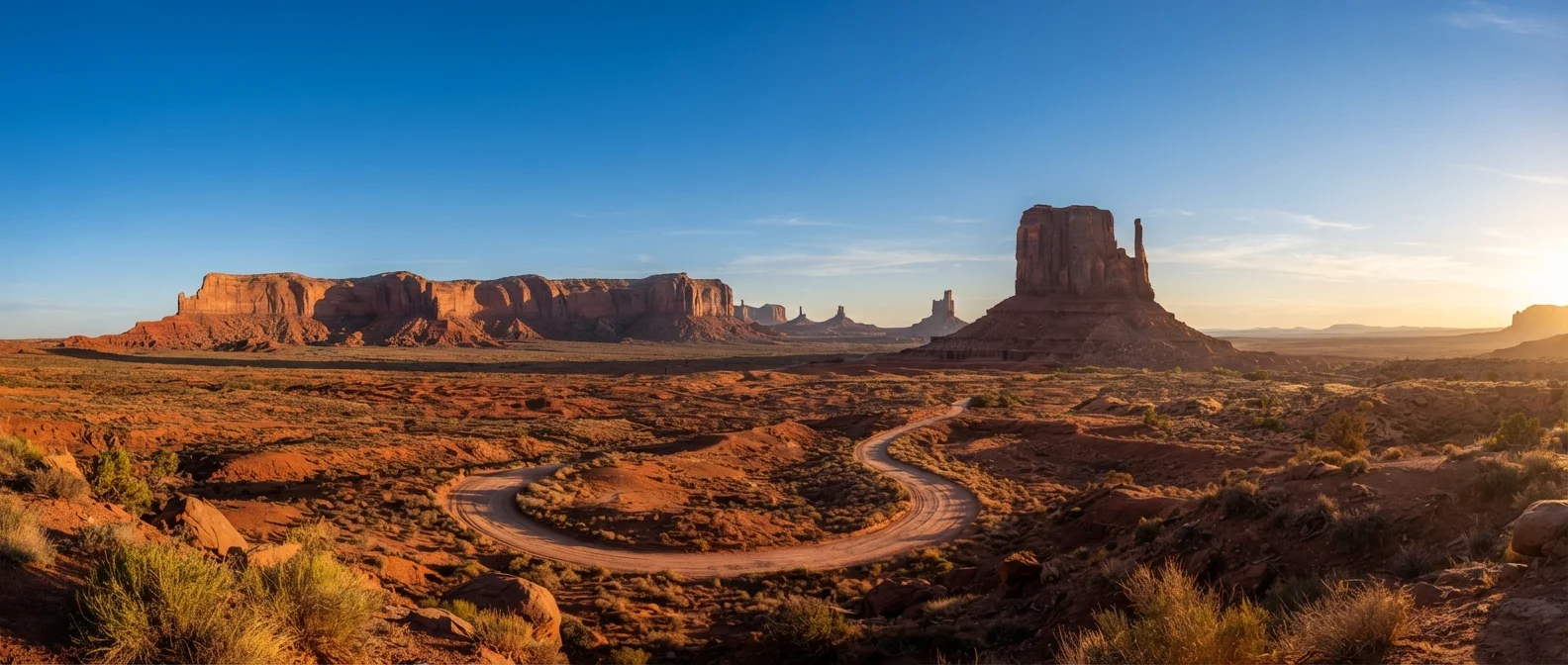
The self-guided option at Monument Valley is the Valley Drive - an unpaved, roughly 17-mile loop that winds past the most recognizable formations: the West and East Mittens, Merrick Butte, the Three Sisters. In a standard sedan with reasonable clearance, it's manageable, though washboard sections and sandy patches will slow you down. In a low-clearance sports car, it becomes genuinely difficult.
Plan two to three hours minimum for the loop if you stop to photograph and absorb the scale. The buttes are taller than they appear from the highway - some reach 1,000 feet above the valley floor - and that scale doesn't register until you're driving among them. Morning light sweeps across the red sandstone in long, warm horizontals; late afternoon turns everything amber and purple.
What the self-guided drive doesn't include: the Wildcat Trail (the one hiking trail accessible without a guide), most named viewpoints beyond the loop, and any of the culturally significant interior areas. The Wildcat Trail itself - a 3.2-mile loop circling the West Mitten Butte - is accessible independently and offers a ground-level perspective that the road doesn't.
17 miles
Length of the self-guided Valley Drive loop
The unpaved loop is the primary independent access route through Monument Valley Navajo Tribal Park.
~1,000 ft
Height of the tallest buttes above valley floor
The West Mitten Butte and other major formations rise dramatically above the desert floor, a scale that surprises most first-time visitors.
3.2 miles
Length of the Wildcat Trail - only hike accessible without a guide
The Wildcat Trail loops around the West Mitten Butte and is the sole hiking trail open to independent visitors within the tribal park.
Guided Access, Cultural Respect, and Where the Lines Are
Licensed Navajo guides open up significantly more of the valley: narrow canyon passages, ancient cliff dwellings, sites with documented historical meaning that aren't visible or accessible from the road. Tours range from jeep excursions to horseback rides to guided hikes, and prices and offerings vary by operator. None are managed or sold through the federal park system - you'll arrange them at or near the visitor center, or through Navajo-owned tour companies in the area.
Beyond logistics, there's an etiquette dimension that matters. Monument Valley is an inhabited landscape - Navajo families live within the tribal park boundaries, and many sacred sites are present throughout the valley. Photography of local residents requires explicit permission and is frequently compensated. Wandering beyond marked areas isn't just rule-breaking; it's trespassing on land with deep cultural significance.
Similar mismatches between expectation and reality affect visitors to Sedona, where trails and cultural sites also carry more complexity than tourist photos suggest.
Download Offline Maps Before You Leave Town
Cell service is unreliable to nonexistent throughout Monument Valley and the surrounding roads. Download offline map data for the region - including the Valley Drive route and the roads leading in - before you leave any town with reliable internet. Do not depend on live GPS navigation once you're within the valley.
Planning the Logistics: What Trips Here Actually Require
Monument Valley sits in one of the more remote corridors of the American Southwest. The visitor center and overlook on the Utah-Arizona border is accessible via US-163, but "accessible" here means an hour-plus from Kayenta, Arizona, and far longer from Page, Flagstaff, or Moab. Services within the valley are limited to the visitor center and adjacent lodge. There is no gas station inside the park. Carry water - more than you think you'll need - and fuel up before you arrive.
The unpaved Valley Drive is typically closed during and after heavy rain due to flash flood risk and road conditions. Check current status through the Navajo Nation Parks website before departure, and don't assume summer afternoon visits are safe from sudden storms. This is high desert terrain where weather shifts fast.
For travelers building a broader Southwest itinerary, Monument Valley pairs naturally with Canyon de Chelly, Antelope Canyon, and the broader Colorado Plateau region. Lesser-visited parks in the American West can fill out a week-long loop without the crowds of more famous stops. And if you're benchmarking against a different kind of remote, Yellowstone's scale and logistics offer a useful contrast in what remote-but-federal really demands.
This article provides general travel information only. Entry fees, road conditions, and access rules are subject to change - verify current details with the Navajo Nation Parks and Recreation department before your visit. Always check official government travel advisories and local conditions before departing.
Frequently Asked Questions
You can explore the 17-mile unpaved Valley Drive on your own without a guide. However, most trails, sacred sites, and areas beyond the main loop - including The Mittens up close - require a licensed Navajo guide. Self-guided visitors are restricted to the loop road and the visitor center area.
No. Monument Valley is tribal land administered by the Navajo Nation, not the National Park Service. America the Beautiful passes and similar federal passes are not valid here. You'll pay a separate entrance fee directly to the Navajo Nation Parks and Recreation department.
Yes, but set realistic expectations. The Valley Drive on your own still delivers the iconic views - the buttes, the mesas, the open sky. A guided tour unlocks areas that are genuinely more intimate and historically rich, so many visitors find it worthwhile if budget allows.
Spring (April-May) and fall (September-October) offer the most comfortable temperatures and dramatic light. Summer is hot and can bring flash floods; winter is cold and occasionally icy on the unpaved Valley Drive. Sunrise and sunset are consistently the most rewarding times of day.
Cell coverage is extremely unreliable throughout the valley and surrounding roads. Download offline maps and GPS navigation before you leave any town. Do not count on streaming, real-time navigation, or emergency data connectivity during your visit.
The content on this site is for informational purposes only and is not a substitute for professional advice. Always consult a qualified professional for guidance specific to your situation.