

Our Verdict
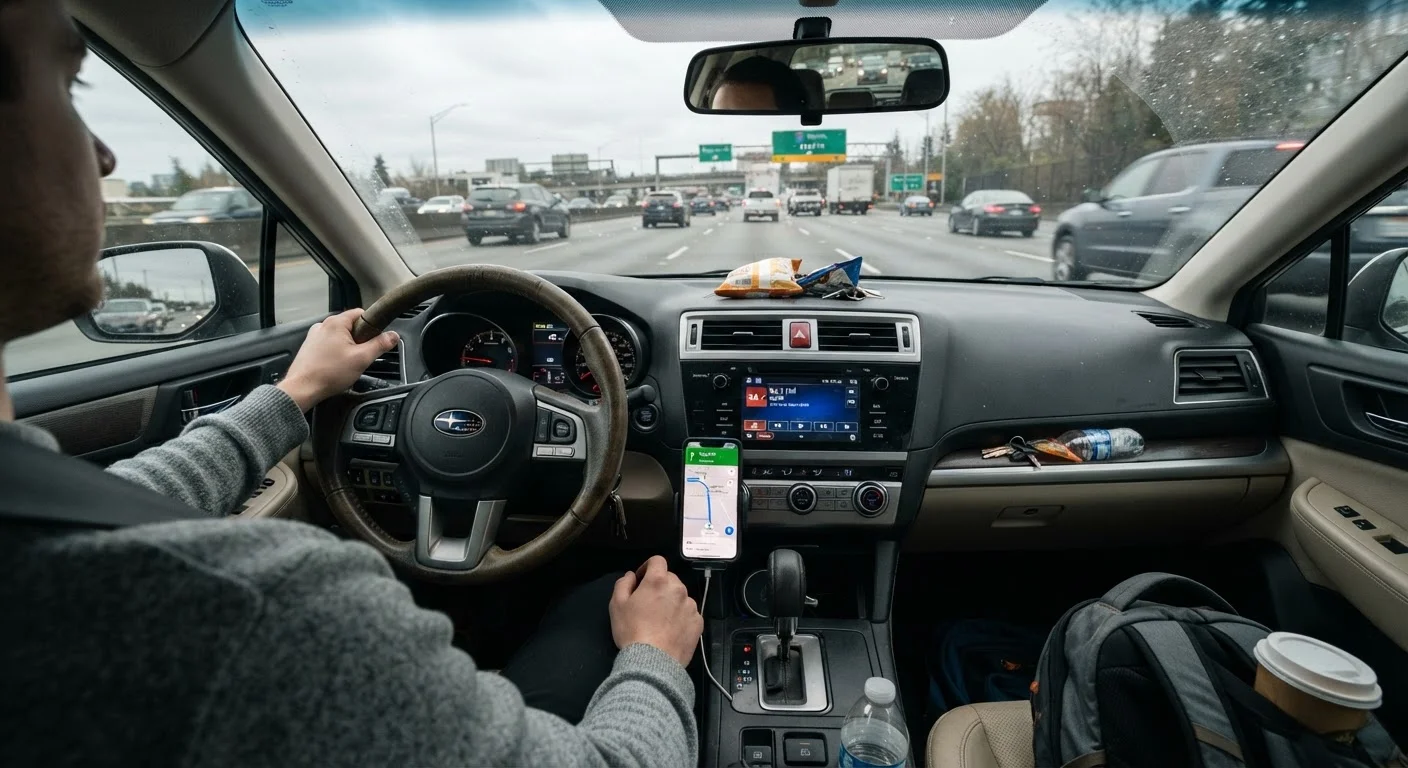
No distraction behind the wheel is truly harmless, but they are not all equally risky. Handheld phone use consistently poses the highest combined risk because it pulls your eyes, hands, and mind away from driving simultaneously. Passengers and audio entertainment sit on a spectrum - manageable under normal conditions but capable of becoming serious hazards in heavy traffic or difficult road situations.
| Best for | Recommended |
|---|---|
| Drivers who want to understand why phone use is uniquely dangerous | Handheld Phone section and cognitive load explanation |
| Drivers who rely on hands-free calling and want to understand residual risk | Hands-Free Calling and cognitive distraction framing |
| Parents or newer drivers managing in-car conversations | Passenger distraction guidance |
The Three Types of Driving Distraction
Transportation safety researchers typically divide driving distractions into three categories: visual (taking your eyes off the road), manual (taking your hands off the wheel), and cognitive (taking your mind off the task of driving). Understanding which category a distraction falls into - or whether it hits multiple categories at once - helps explain why some habits are far more dangerous than they feel.
Cognitive distraction is the most underappreciated of the three. A driver can have eyes forward and both hands on the wheel while still failing to process a red light, a merging vehicle, or a pedestrian stepping off a curb. The brain is simply engaged elsewhere. Research from the AAA Foundation for Traffic Safety has found that some voice-based tasks - including hands-free phone calls - produce measurably elevated cognitive load that persists even after the task ends.
See also: where your eyes should be at every moment behind the wheel.
Handheld Phones vs. Hands-Free Calling
Handheld phone use while driving is the clearest example of a triple distraction: you look at the screen (visual), hold or tap the device (manual), and follow a conversation or text thread (cognitive). Studies published by the National Highway Traffic Safety Administration have consistently linked handheld phone use to significantly elevated crash risk compared with undistracted driving.
Switching to hands-free calling removes the visual and manual components - but the cognitive distraction remains. Conversations with a remote caller differ from conversations with a passenger in an important way: the caller cannot see the road, so they don't naturally pause when traffic gets complex. A passenger typically does. That difference in shared situational awareness means hands-free calling carries more residual cognitive risk than many drivers expect.
Silence Notifications Before You Start
Putting your phone in Do Not Disturb mode before driving removes the temptation to glance at incoming alerts. Even a phone screen lighting up in your peripheral vision can trigger a brief attentional shift. Many smartphones now include dedicated driving modes that handle this automatically.
For a deeper look at why no call is truly low-risk, see why phone use at the wheel is riskier than most drivers believe.
| Handheld Phone | Hands-Free Calling | Radio / Audio | Adult Passenger | Child Passenger | |
|---|---|---|---|---|---|
| Visual distraction | High | Low | Low-Moderate | Low | Moderate |
| Manual distraction | High | Low | Low | None | Moderate |
| Cognitive distraction | High | Moderate-High | Low-Moderate | Low-Moderate | Moderate-High |
| Caller/passenger pauses for traffic | No | No | N/A | Often yes | Rarely |
| Overall risk level | Very High | Moderate | Low-Moderate | Low (experienced drivers) | Moderate-High |
Radio, Podcasts, and Audio Entertainment
Adjusting a radio dial or scrolling through a playlist requires a brief visual and manual shift - similar in scale to using a climate control knob. Modern voice-activated audio systems reduce but don't eliminate this. The larger question with audio content is cognitive: how mentally engaging is what you're listening to?
Background music with no lyrics, or familiar music at moderate volume, tends to have minimal impact on driving performance for most drivers. Highly engaging content - complex talk radio debates, emotionally charged podcasts, or unfamiliar audio requiring active concentration - can produce a form of cognitive distraction that narrows a driver's attention field. Interestingly, some research suggests very low-stimulation driving environments (long, empty highways at night) may benefit from mild audio engagement that helps maintain alertness, though this is context-dependent.
~95 ft/sec
Distance traveled per second at 65 mph
Cited by NHTSA to illustrate how quickly brief attention lapses translate to real road distance covered without awareness.
27 seconds
Estimated attention recovery after voice task
AAA Foundation for Traffic Safety research suggests cognitive distraction can linger up to 27 seconds after completing a hands-free voice interaction.
Passengers: Risk Factor or Safety Net?
Passengers occupy a unique category. Adult passengers in the front seat are associated with lower crash risk for experienced drivers in some studies - partly because a present passenger naturally modulates conversation when road conditions change, and may even help navigate or flag hazards. That's a meaningful difference from phone-based distraction.
However, context matters considerably. Teen drivers with multiple teen passengers show notably higher crash risk, according to data gathered by the Insurance Institute for Highway Safety (IIHS). Young, inexperienced drivers appear more susceptible to social distraction and peer pressure effects. Children in the back seat can also generate significant cognitive and manual distraction - reaching back, managing disputes, or responding to urgent requests.
The practical takeaway: the distraction potential of a passenger scales with the driver's experience level, the nature of the conversation, and the complexity of the driving environment. A calm adult passenger on a familiar highway is a very different variable than an excited group of teenagers on an unfamiliar road at night. For more on managing challenging driving conditions, see night driving habits that separate confident drivers from anxious ones.
Putting It in Perspective
At 65 mph, a vehicle travels roughly 95 feet per second. A five-second glance at a phone - about the time it takes to read a short text - means traveling nearly the length of a football field without your eyes on the road. That figure, cited frequently by NHTSA in distracted driving awareness materials, helps illustrate why even brief lapses compound quickly.
Understanding distraction types also helps with practical decision-making. Before reaching for a device or engaging in a demanding conversation, asking yourself which category of distraction is involved - and whether you're already managing any others - gives you a useful real-time check. Habits that quietly erode safe driving often begin with small distraction compromises that seem harmless in the moment. Staying alert to the pattern is part of staying safe over time. For related context on attention and reaction, see what driver fatigue actually does to your reaction time.
The content on this site is for informational purposes only and is not a substitute for professional advice. Always consult a qualified professional for guidance specific to your situation.