

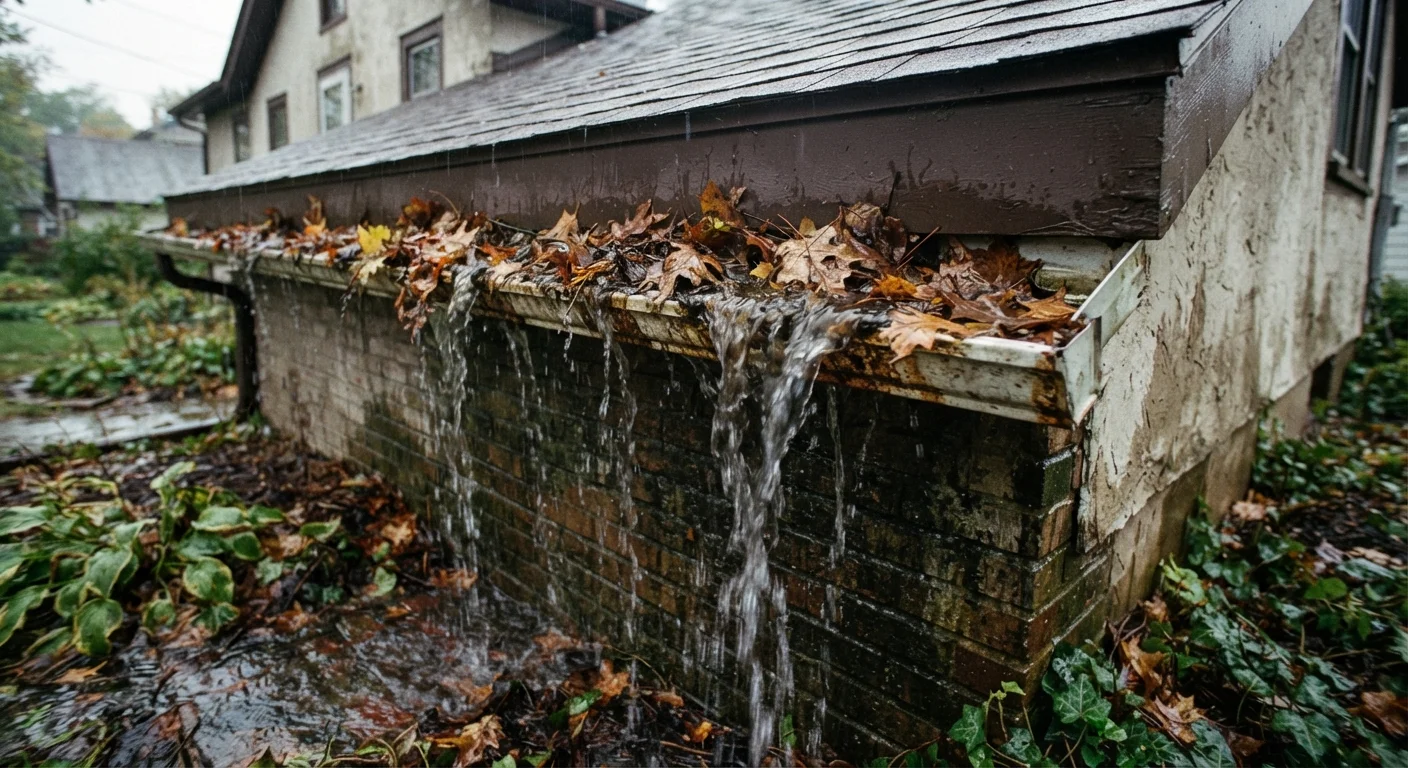
The Underrated Role Gutters Play
Most homeowners think of gutters as a minor feature - something to clean out once a year if they remember. In reality, gutters are one of the most consequential water management systems on a home. Their job is to intercept rain as it runs off the roof and carry it away from the structure, keeping walls, foundations, and landscaping safe from water intrusion.
A typical roof sheds a significant volume of water during even a moderate storm. Without gutters channeling that water away, it falls directly against exterior walls and pools around the foundation - exactly where it causes the most damage over time. Understanding this function helps explain why gutter failures, even gradual ones, lead to consequences that go well beyond a damp garden bed.
For a broader view of how small maintenance gaps compound into costly repairs, see our guide to the true cost of skipping routine home maintenance.
What Goes Wrong When Gutters Are Ignored
Gutter problems typically fall into two categories: blockages and physical damage. Both redirect water in ways the home isn't designed to handle.
~600 gallons
Water shed per inch of rain per 1,000 sq ft of roof
This figure, based on standard roof runoff calculations, illustrates why even moderate storms generate large volumes of water that gutters must manage effectively.
2x per year
Minimum recommended gutter cleaning frequency
Home maintenance guidance from extension services and building professionals consistently recommends biannual cleaning as a baseline for most US climates.
Up to $10,000+
Potential cost of foundation water damage repairs
Foundation repair costs vary widely based on severity and region, but water intrusion damage left unaddressed consistently ranks among the most expensive home repairs.
Blockages and Overflow
When gutters fill with leaves, seed pods, or compacted debris, rainwater has nowhere to go but over the edge. That overflow lands directly against the foundation, saturating the surrounding soil. Consistently wet soil exerts hydrostatic pressure against basement walls and crawl space structures - a leading contributor to foundation cracking and seepage. This connection between gutters and foundation health is explored in more depth in our article on how gutters work and what neglect costs.
Physical Damage
Gutters that sag, pull away from the fascia, or develop rust holes no longer route water effectively. Water that seeps behind the gutter line can rot the fascia board and soffit - the wooden trim that supports the gutter and seals the roof edge - creating an entry point for moisture into the roof structure itself. That path connects directly to the escalation pattern described in our article on why small roof leaks become big structural problems.
Check Downspout Extensions Too
A clean gutter that empties into a downspout depositing water right against the house still poses a risk. Downspout extensions or splash blocks should direct water at least 4-6 feet from the foundation. Check that extensions haven't shifted or become buried over time.
The Seasonal Maintenance Case
Gutter performance is tied directly to the seasons. Autumn leaf drop is the most obvious threat, but spring brings its own debris - pollen, seeds, and blossoms that compact quickly into a paste-like material that blocks drainage just as effectively as leaves. Ice dams in colder climates add another layer of risk: when gutters are blocked and temperatures drop, ice can back up under roof shingles and accelerate interior water intrusion.
A practical seasonal rhythm for most US homeowners looks like this: a thorough cleaning in late spring, and another in late fall after the majority of leaves have dropped. Homes surrounded by mature trees - particularly oaks, which hold their leaves longer - may need an additional mid-season pass. Downspouts deserve equal attention; a clear gutter that empties into a blocked downspout still can't do its job.
Landscaping choices also affect how well your drainage system performs. If soil grades toward the house rather than away from it, even well-functioning gutters may not fully protect the foundation. Our article on how landscaping choices affect your home's structure covers this interaction in detail.
Knowing When to Call a Professional
Routine cleaning on a single-story home may be within reach for a careful DIYer with the right ladder and safety awareness. But gutter inspection and repair - especially on two-story homes, complex rooflines, or where structural issues like fascia rot are present - calls for a qualified professional. Work at height carries real injury risk, and improper gutter reattachment or slope correction done incorrectly can worsen drainage rather than fix it.
Permits and Codes Rarely Apply - But Safety Does
Gutter cleaning and minor repairs generally don't require permits in most US jurisdictions. However, work involving structural fascia replacement or rerouting drainage may intersect with local codes. Always verify with your local building department if you're unsure whether a scope of work requires a permit.
Signs that warrant a professional look include gutters pulling away from the roofline, visible rust or holes, water stains on exterior walls below the gutter line, and any evidence of moisture in the basement or crawl space following heavy rain. Some of what looks like a gutter problem may also be a symptom of a wider issue - common home maintenance myths can make it harder to identify the true source of water intrusion.
Gutter maintenance is one of the highest-return items in a homeowner's seasonal checklist - modest in cost when kept up, significant in consequence when skipped.
Frequently Asked Questions
Most homes need gutter cleaning at least twice a year - once in late spring and once in late fall after leaves have dropped. Homes near mature deciduous trees may need cleaning three or four times annually. Regular cleaning prevents blockages that lead to overflow and water damage.
Debris buildup causes water to overflow rather than drain away from the house. Over time, this saturates the soil around your foundation, can cause basement seepage, accelerates exterior wood rot, and may contribute to fascia and soffit deterioration. Repair costs from prolonged neglect typically far exceed routine cleaning costs.
Yes. When gutters overflow or downspouts deposit water too close to the house, soil around the foundation becomes consistently saturated. This hydrostatic pressure can cause cracks, shifting, or water intrusion in basements and crawl spaces over time. Proper downspout extensions help direct water well away from the structure.
Common warning signs include water stains on exterior siding below the gutter line, sagging or pulling-away sections, pooling water near the foundation after rain, and visible rust or holes. Paint peeling around fascia boards is another indicator that water is escaping where it shouldn't.
Gutter guards can reduce how often gutters need cleaning and may help keep out larger debris like leaves and twigs. However, no guard eliminates maintenance entirely - small debris, seeds, and shingle granules can still accumulate. Think of guards as a complement to maintenance, not a replacement.
Basic cleaning on a single-story home may be manageable for a confident DIYer with a sturdy ladder and proper safety practices. However, work on multi-story homes, steep rooflines, or gutters requiring repair is best left to a professional. Safety should always take priority over cost savings.
The content on this site is for informational purposes only and is not a substitute for professional advice. Always consult a qualified professional for guidance specific to your situation.