

What Companion Planting Actually Means
Companion planting is not a single technique - it's a broad principle. The idea is that certain plants, when grown near one another, interact in ways that benefit at least one of them. These interactions happen through chemical signals in the soil, scent compounds released into the air, physical structure, or the insects and microbes each plant attracts.
The practice has roots in Indigenous and traditional farming systems around the world, long before the terminology existed. Today, it's a recognized concept in organic and regenerative gardening, though researchers continue to study which specific pairings deliver reliable results and under what conditions.
It's worth noting that companion planting is not a guaranteed fix. Factors like soil quality, local pest populations, spacing, and climate all influence whether a pairing delivers the intended benefit. That said, many combinations are low-risk and worth experimenting with in most home gardens.
How Plants Help Each Other: Key Mechanisms
Understanding how companion planting works helps you choose pairings with intention rather than guesswork. There are several main mechanisms at play:
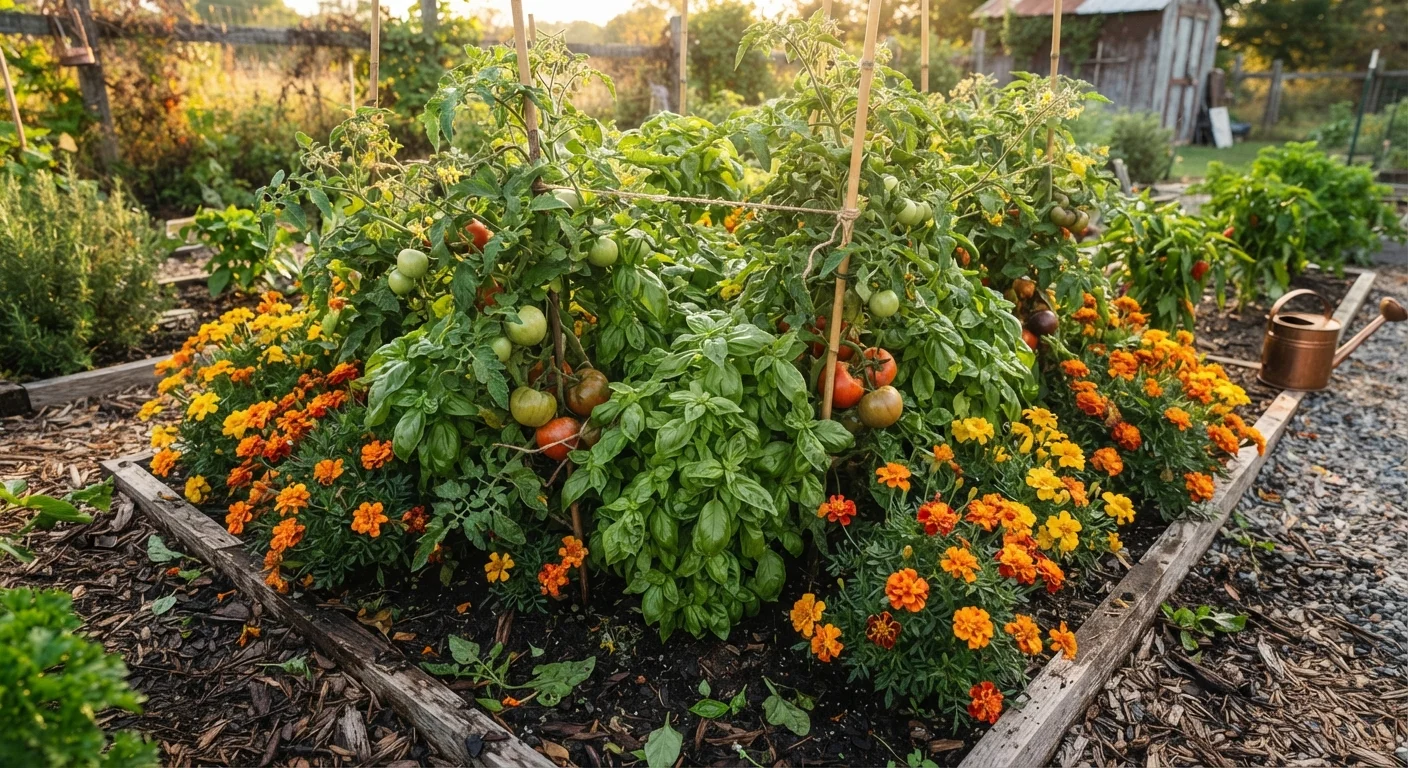
- Pest deterrence: Some plants emit chemical compounds - through their roots or foliage - that repel specific insects. Marigolds, for instance, are widely used near vegetables because they can deter whiteflies and certain nematodes in the soil.
- Trap cropping: Certain plants attract pests away from crops you want to protect. Nasturtiums are often planted near brassicas to draw aphids to themselves instead.
- Nitrogen fixation: Legumes (beans, clover, peas) host bacteria in their root nodules that convert atmospheric nitrogen into a form usable by plants. Growing legumes alongside or before heavy-feeding crops can reduce the need for supplemental fertilizer.
- Pollinator attraction: Flowering companions draw more pollinators to the garden, which can improve fruit set on crops like squash, cucumbers, and tomatoes.
- Physical support and shade: Taller plants can provide a trellis or wind protection for smaller ones, while low-growing plants can serve as living mulch, suppressing weeds and retaining soil moisture.
“Diversity in the garden is one of the most powerful tools a grower has. When you mix species thoughtfully, the garden starts to manage itself in ways a monoculture never can.”
— Jeff Lowenfels, Author of 'Teaming with Microbes' and advocate for soil-based gardening practices
The Three Sisters: A Well-Documented Example
The most widely cited and best-documented companion planting system is the Three Sisters - a traditional Indigenous agricultural method using corn, beans, and squash grown together. Each plant plays a distinct role:
- Corn provides vertical structure for bean vines to climb.
- Beans fix nitrogen in the soil, feeding the other two plants.
- Squash spreads low along the ground, shading out weeds and reducing moisture loss from the soil.
The Three Sisters illustrates why companion planting works best as a system rather than a one-to-one swap. Each element supports the others, and the combined result is more productive than any of the three grown alone in equivalent space. For gardeners curious about building on this principle, well-tested companion combinations offer a useful starting point.
3-4x
Yield improvement in polyculture systems
Research published in agricultural journals has found that well-designed multi-crop systems can outperform monocultures in land-use efficiency, a concept measured by the Land Equivalent Ratio (LER).
~80%
Of flowering plants depend on insect pollinators
According to the U.S. Forest Service, roughly 80% of the world's flowering plants rely on insects for pollination - making pollinator attraction a meaningful benefit of companion planting strategies.
Getting Started Without Overcomplicating It
A common mistake is trying to redesign an entire garden around companion planting before you've tested anything. A more practical approach is to introduce one or two pairings into an existing layout and observe the results over a season.
Start with One or Two Pairings
Rather than replanting your entire garden, choose one or two well-documented companion combinations - such as tomatoes with basil or beans with corn - and trial them this season. Keep brief notes on pest activity, plant vigor, and yield so you have something concrete to compare next year.
Good soil underpins any companion planting strategy. Healthy, biologically active soil gives plants the resilience to thrive alongside neighbors and fight off pests. If you haven't already, consider building a composting routine to improve soil structure and fertility naturally.
It's also worth considering the broader ecological picture. Gardens that incorporate native plants alongside edibles naturally support a wider range of beneficial insects - which is one of the most consistent ways to improve pollination and natural pest control. Ground-covering plants can also serve as living mulch in a companion system; low-growing ground covers are worth exploring for that role.
Start small, keep notes, and adjust based on what you observe. Companion planting rewards patient, curious gardeners more than those looking for an instant solution.
Frequently Asked Questions
Some companion planting combinations have solid research support, such as using marigolds to deter nematodes or planting legumes to fix nitrogen. Others rely more on gardening tradition and observation. The results depend heavily on your specific garden conditions, climate, and soil.
Marigolds paired with tomatoes or peppers, basil near tomatoes, and nasturtiums as a trap crop for aphids are widely used beginner-friendly combinations. These pairings are low-risk and relatively well-documented compared to more complex arrangements.
Companion planting can meaningfully reduce pest pressure in many gardens, but it's unlikely to eliminate the need for all pest management. Think of it as one tool in an integrated approach alongside good soil health, proper spacing, and crop rotation.
Yes. Some plants release compounds that inhibit neighboring plants - a phenomenon called allelopathy. For example, black walnut trees produce juglone, which can harm tomatoes and peppers growing nearby. Keeping plants like fennel isolated is also commonly recommended, as it can inhibit many vegetable crops.
Absolutely. Many companion planting strategies scale well to containers and raised beds. Pairing herbs like basil or chives with vegetables in the same planter is a practical approach for smaller growing spaces.
The content on this site is for informational purposes only and is not a substitute for professional advice. Always consult a qualified professional for guidance specific to your situation.