

Our Verdict
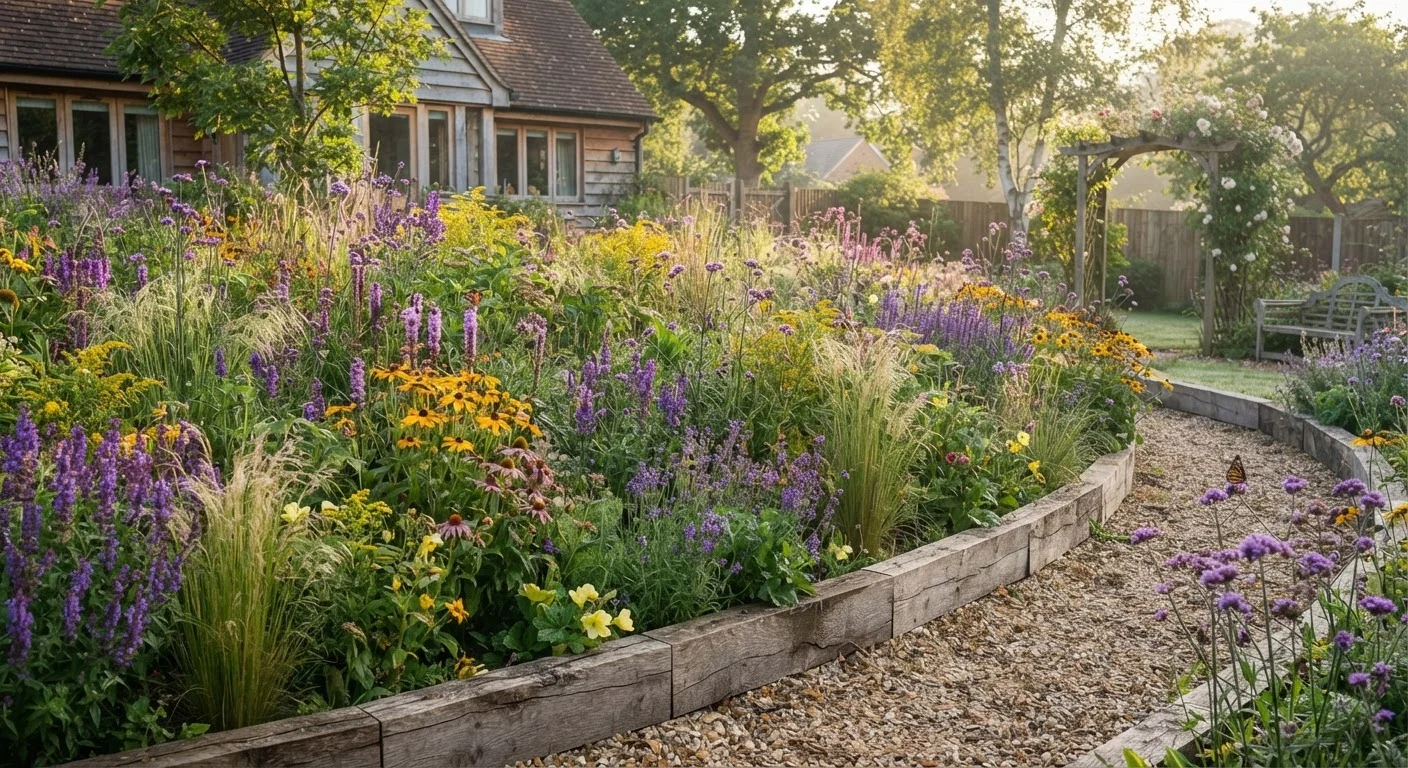
Native plants offer genuine long-term advantages - lower inputs, stronger ecological function, and resilience to local conditions. But the transition requires patience, careful sourcing, and sometimes a willingness to educate neighbors about what a healthy native garden looks like.
Native planting works best for homeowners willing to invest upfront time in research and establishment, who value ecological impact and reduced long-term maintenance over instant curb appeal.
What 'Native' Actually Means - and Why It Matters
A native plant is one that evolved naturally in a specific region before European settlement - not just any plant that grows well there. A prairie coneflower native to the Midwest is not native in the Pacific Northwest, even if it thrives. This regional specificity is what gives native plants their ecological edge: they developed alongside local insects, birds, soil microbes, and climate patterns over thousands of years.
When choosing natives, it helps to work from your specific ecoregion, not just your USDA hardiness zone. State extension programs and native plant societies publish regionally accurate lists, which are far more reliable than broad national guides. See our guide to low-maintenance garden design for how plant selection fits into overall layout planning.
Native vs. Naturalized: An Important Distinction
A plant that has naturalized - meaning it grows freely in the wild - is not the same as a native species. Many naturalized plants are actually invasive introductions that outcompete true natives. Examples include English ivy and Japanese honeysuckle, both of which spread readily in US landscapes. Always verify a plant's origin before assuming it belongs in an ecological planting scheme.
The Real Advantages of Going Native
Once established - typically after one to three growing seasons - native plants generally demand far less from the gardener. Their root systems are adapted to local precipitation patterns, reducing or eliminating supplemental watering in many regions. They rarely need synthetic fertilizers because they're suited to local soil chemistry.
Reduced water needs after establishment
Natives are adapted to local rainfall patterns, meaning most require little to no supplemental irrigation once their root systems are established - typically after one to three seasons.
Supports local pollinators and wildlife
Many native insects, especially specialist bees and butterflies, depend on specific native plants for pollen, nectar, or larval food. Non-native ornamentals often cannot fill this role.
Lower fertilizer and pesticide dependency
Because they evolved in local soil conditions, native plants generally don't need synthetic soil amendments and are less vulnerable to native pest pressure than exotic species.
Long-term resilience to local climate extremes
Established natives are typically more tolerant of regional drought, cold snaps, or heavy rain events than plants sourced from distant climates.
Can improve local soil health over time
Deep-rooted native perennials and grasses improve soil structure and organic matter as they cycle through seasons, benefiting the broader garden ecosystem.
The ecological benefits are equally significant. Native plants support specialist pollinators that cannot use non-native plants - native bees, for instance, often depend on specific native flowers for pollen. Gardens planted with a mix of native trees, shrubs, and perennials can support significantly more caterpillar species than those dominated by exotic ornamentals, which in turn supports nesting birds. For homeowners interested in companion planting strategies, native plant combinations often create natural pest-management relationships.
The Limitations You Should Plan For
Going native isn't without friction. The establishment phase is the most commonly cited challenge: many native perennials put energy into root development in their first season, so visible top growth can be sparse or unimpressive. Patience is essential - what looks like failure in year one may reward you in year two.
Slow, sometimes underwhelming establishment phase
Many native perennials prioritize root growth in their first season, producing little visible top growth. Gardens can look sparse or weedy for one to two years before filling in.
True natives are harder to source
Many plants marketed as native are actually cultivars with altered traits. Finding genetically reliable, regionally appropriate natives often requires specialist nurseries or native plant societies.
Some species spread aggressively
Certain native plants - such as some goldenrods or wild gingers - can outcompete neighbors if not managed. Research each species' growth habit before including it in a mixed planting.
May conflict with HOA or local ordinances
Naturalistic native plantings can attract complaints in neighborhoods with conventional landscaping expectations. Some municipalities still classify tall native plants as 'weeds' under local codes.
Higher upfront cost from specialist suppliers
Native plants from reputable native plant nurseries often cost more per unit than comparable ornamentals from big-box retailers, and selection may be limited or seasonal.
Sourcing is another real obstacle. Many plants labeled 'native' in garden centers are actually cultivars - selected varieties bred for specific flower colors or compact forms - whose ecological value may differ from their wild counterparts. Buying from specialist native plant nurseries or propagating from verified seed sources takes more effort. Additionally, some native plants can be vigorous spreaders; understanding the growth habits of each species before planting helps prevent one plant from crowding out others. For ground-level planting options, native ground cover choices are worth exploring.
~29%
Decline in North American bird populations since 1970
According to a 2019 study published in Science, North America has lost roughly 3 billion birds since 1970, with habitat loss and reduced insect availability cited as key drivers - factors native plant gardens can partially address at the residential scale.
70%
Of landscaped area that is typically lawn in US suburbs
Research from various urban ecology studies estimates that conventional turf grass dominates most suburban landscapes, offering minimal wildlife value compared to native plantings of equivalent area.
Practical Considerations Before You Plant
Before converting a bed or border to natives, check whether your HOA or municipality has any rules about plant height, 'weed' definitions, or lawn alternatives. Some jurisdictions have updated their codes to accommodate natural landscaping, but others have not. It's worth verifying before investing time and money in a planting scheme that may need to be altered later.
Also think about how your landscaping choices relate to your home's structure - native trees and large shrubs planted too close to foundations can cause problems over time, regardless of species. Starting with a small demonstration bed rather than a full yard conversion lets you observe growth habits, spot any spreading tendencies, and build confidence before scaling up. Blending natives into existing borders alongside well-behaved non-invasive plants is a low-risk entry point that many gardeners find satisfying.
The content on this site is for informational purposes only and is not a substitute for professional advice. Always consult a qualified professional for guidance specific to your situation.