

Our Verdict
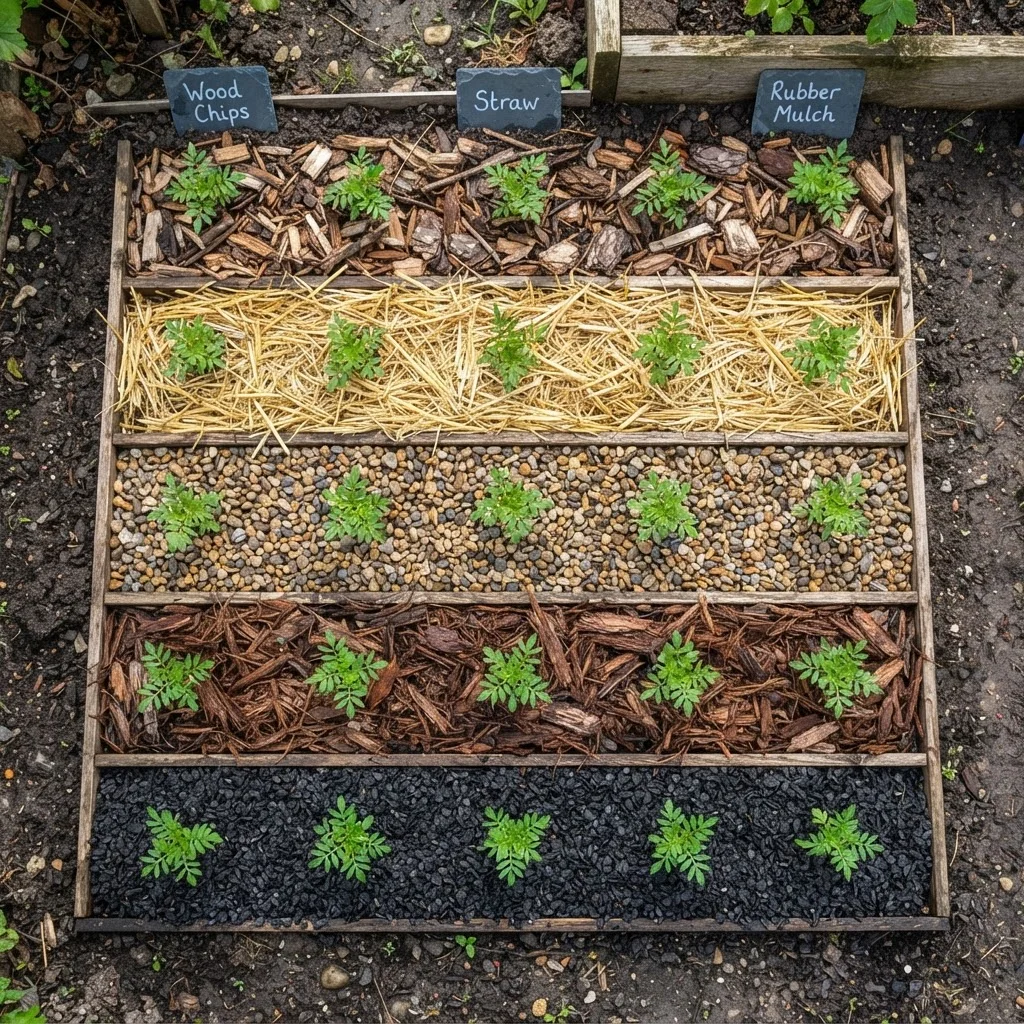
No single mulch type is universally best - each material has a distinct job to do. Organic mulches build long-term soil health but need periodic replenishment, while inorganic options offer durability with minimal maintenance. Matching the material to the garden zone and your primary goal will deliver the most consistent results.
| Best for | Recommended |
|---|---|
| Vegetable gardens and annual beds | Straw or shredded leaves |
| Established ornamental beds and trees | Wood chips or shredded bark |
| Pathways and drainage areas | Gravel or crushed stone |
| Low-maintenance playgrounds or utility zones | Rubber mulch |
Why Mulch Type Matters More Than You Might Think
Mulch is one of the most useful tools in a gardener's toolkit, but reaching for the nearest bag without understanding what's inside can lead to disappointing results. Different materials behave in fundamentally different ways once they hit the soil. As explained in our deeper look at what mulch does beneath the surface, the benefits go well beyond appearance - moisture retention, temperature regulation, and weed suppression all depend heavily on the specific material you choose.
The broad split is between organic mulches, which decompose and feed the soil ecosystem over time, and inorganic mulches, which are stable, long-lasting, and largely nutrient-neutral. Within each category, individual materials have distinct trade-offs worth understanding before you buy.
Organic Mulch Options Compared
Organic mulches are generally the better choice wherever you want to improve soil health over time. Here's how the most common types differ:
Wood Chips and Shredded Bark
Wood chips are one of the most widely available organic mulches. They break down slowly - over one to three years - making them well-suited to perennial beds, tree rings, and shrub borders. Shredded bark decomposes somewhat faster and has a finer texture that looks tidy in ornamental plantings. Both suppress weeds effectively when applied at 2-3 inches deep. A note of caution: fresh wood chips piled directly against plant stems can promote rot, and in some conditions may temporarily tie up nitrogen in the top layer of soil as they decompose. Keep mulch a few inches away from stems and trunks.
Straw
Straw (not hay, which contains weed seeds) is lightweight, inexpensive, and excellent at retaining soil moisture. It's a popular choice for vegetable gardens and newly seeded lawns. It breaks down within a single growing season, which means it needs replenishing annually - but that decomposition also adds organic matter to the soil. Straw can harbor slugs in very wet climates, so monitor closely if that's a concern in your area.
Shredded Leaves
Fallen leaves run through a mower or shredder become an excellent free mulch. They improve soil structure, support earthworm activity, and are especially valuable around woodland plants. Whole leaves, however, can mat together and block water penetration, so shredding is worth the extra step. This is one of the most sustainable mulch options available to any homeowner with deciduous trees.
Compost
A 1-2 inch layer of finished compost functions as mulch and soil amendment simultaneously. It won't suppress weeds as aggressively as thicker mulches, but it feeds soil biology directly. Best used in combination with another mulch layer on top.
| Wood Chips | Straw | Shredded Leaves | Gravel | Rubber Mulch | |
|---|---|---|---|---|---|
| Soil improvement | Yes, slow release | Yes, seasonal | Yes, good | None | None |
| Weed suppression | Strong | Moderate | Moderate | Moderate | Strong |
| Moisture retention | Good | Very good | Good | Low | Moderate |
| Longevity | 1-3 years | 1 season | 1 season | Many years | Many years |
| Best use | Perennial beds, trees | Vegetable gardens | Around shrubs, trees | Paths, rock gardens | Playgrounds, utility zones |
| Cost (general range) | Low to moderate | Low | Free if homemade | Moderate to high | High |
Inorganic Mulch Options Compared
Inorganic mulches are durable and low-maintenance, making them appropriate for specific situations - but they are not a substitute for organic mulches where soil health is the goal.
Gravel and Crushed Stone
Gravel works well in pathways, around drought-tolerant plants, and in rock gardens. It allows excellent drainage and doesn't decompose, so it's a genuinely long-term solution. However, gravel absorbs and radiates heat, which can stress moisture-sensitive plants in hot climates. It also allows weed seeds to settle into gaps over time, so a landscape fabric underlayer is sometimes used - though fabric has its own long-term drawbacks for soil biology, as noted in our look at common garden myths.
Rubber Mulch
Made from recycled tires, rubber mulch is popular in playgrounds and utility zones because it is very slow to break down and provides cushioning. It does not improve soil in any meaningful way and can leach compounds into the ground over time - research on the extent of this is ongoing, so many gardeners prefer to limit its use to non-edible, non-growing areas. It is not recommended for vegetable or fruit gardens.
Avoid Rubber Mulch Near Edible Plants
Rubber mulch made from recycled tires may leach chemical compounds into surrounding soil, and the long-term implications for food-growing areas are not fully established. For vegetable gardens, herb beds, or fruit trees, stick to certified organic mulch materials. When in doubt about any mulch's sourcing or composition, check with the supplier before applying it near edibles.
Matching Mulch to Your Garden's Needs
The practical question is always: what are you actually trying to achieve?
- Moisture retention in vegetable beds: Straw or shredded leaves are excellent seasonal choices.
- Long-term weed suppression in shrub borders: Wood chips at 3 inches deep are hard to beat.
- Improving poor or compacted soil: Organic mulches of any kind, applied annually, gradually improve structure. For context on soil improvement strategies, see how raised beds and in-ground planting compare for related soil considerations.
- Paths and decorative areas: Gravel or larger stones offer clean, durable coverage.
- Slopes prone to erosion: Shredded bark or wood chips interlock better than loose materials like straw. Living ground covers can also complement mulch on slopes - see ground cover plants worth knowing about for plant-based alternatives.
Refresh Organic Mulch Annually
Because organic mulches decompose, plan to top them up each spring or fall. A light rake to check remaining depth is all it takes. Adding a fresh inch or two keeps the benefits consistent without smothering the soil. Autumn is also an ideal time to mulch around perennials for winter root protection.
Whichever mulch you choose, depth and placement are as important as material. Too little mulch (under 1 inch) won't suppress weeds reliably; too much (over 4 inches) can suffocate roots and trap excess moisture. And keeping any mulch several inches clear of plant stems remains one of the most consistently useful habits in the garden.
The content on this site is for informational purposes only and is not a substitute for professional advice. Always consult a qualified professional for guidance specific to your situation.