

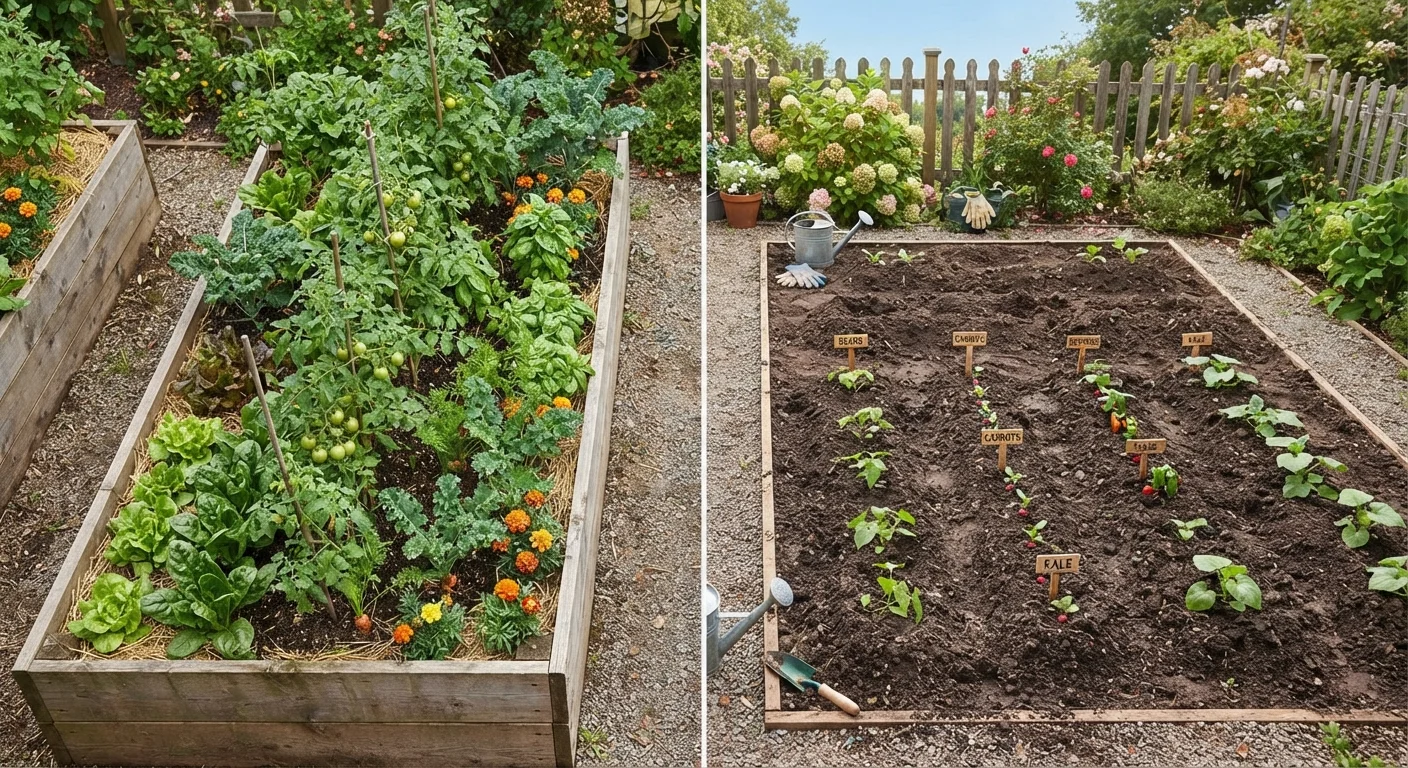
Our Verdict
Neither raised beds nor in-ground planting is universally superior - each excels under different conditions. Raised beds shine for gardeners dealing with poor soil, limited mobility, or compact spaces, while in-ground planting is a practical, lower-cost choice for those with good native soil and larger plots to work.
| Best for | Recommended |
|---|---|
| Gardeners with poor, compacted, or contaminated native soil | Raised Beds |
| Those managing physical limitations or accessibility needs | Raised Beds |
| Gardeners with large areas and healthy, workable native soil | In-Ground Planting |
| Budget-conscious gardeners starting with minimal upfront cost | In-Ground Planting |
Understanding the Core Difference
Raised beds are enclosed growing structures - typically framed in wood, metal, or composite material - filled with a custom soil mix and elevated above the surrounding ground. In-ground planting means working directly with your existing native soil, amending it as needed and sowing or transplanting directly into the earth.
Both approaches can support a thriving garden, but they suit different starting conditions, goals, and physical circumstances. Understanding the trade-offs before you commit saves time, money, and frustration down the line. This comparison covers the key dimensions that matter most to everyday gardeners.
If you're also weighing how to populate your beds once they're established, our guide on growing from seed vs. buying transplants covers another important decision point.
Raised Beds: Strengths and Limitations
Raised beds give you direct control over soil quality from the start. You fill them with a blend of topsoil, compost, and other amendments, bypassing whatever compacted clay or sandy subsoil lies beneath. This matters enormously if your native ground is poor, rocky, or potentially contaminated - a concern in older urban lots where lead or other residues may be present in soil.
Drainage is a major advantage. Water moves freely through a well-composed raised bed mix, reducing the waterlogged conditions that damage roots. Soil also warms faster in spring, extending the growing season by a useful margin in cooler climates.
Accessibility is another genuine benefit. A bed built to a height of 18-24 inches significantly reduces the need to kneel or bend, making gardening more manageable for people with back pain or mobility limitations.
Start Small With Raised Beds
If you're new to raised beds, start with one or two manageable structures before committing to a full installation. This lets you get a feel for the soil mix, watering needs, and maintenance rhythm before scaling up. Many gardeners underestimate how much water raised beds require during warm months.
The trade-offs are real, however. Raised beds require a meaningful upfront investment - materials, soil, and filling a deep bed adds up quickly. They also dry out faster than in-ground plots, which can mean more frequent watering, especially in summer. Frames eventually deteriorate and will need replacement.
In-Ground Planting: Strengths and Limitations
In-ground planting is the traditional approach, and it works well when conditions support it. The most obvious advantage is cost: there's no frame to build and no imported soil to purchase. If your native soil is reasonably healthy and well-structured, in-ground planting requires far less initial investment.
Deep-rooted plants - including many fruit trees, shrubs, and perennials - thrive in-ground because their roots can extend far beyond any raised bed boundary. Large-scale vegetable gardens and native plant landscapes are also naturally suited to in-ground methods. Our article on native plants in your garden explores how species adapted to local soils often perform especially well without heavy amendment.
The limitations centre on soil quality. Compacted, clay-heavy, or nutrient-depleted ground can undermine even the best-planned garden. Improving native soil takes time and consistent effort - adding organic matter year after year. Weeds also tend to be a more persistent challenge in open ground, and poor drainage in low-lying areas can be difficult to correct without significant earthwork.
| Raised Beds | In-Ground Planting | |
|---|---|---|
| Upfront cost | Moderate to high (materials + soil) | Low (amendments only) |
| Soil control | Complete - custom-filled mix | Limited - depends on native soil |
| Drainage | Excellent in most cases | Variable - depends on site |
| Accessibility | High - reduced bending | Standard - ground level |
| Moisture retention | Lower - dries out faster | Higher - stays moist longer |
| Scalability | Limited by cost and space | Scales well across large areas |
| Weed pressure | Generally lower at first | Often higher, ongoing effort |
| Deep-rooted plants | Restricted root depth | Unrestricted root spread |
Factors That Should Guide Your Decision
Start with a realistic assessment of your existing soil. A simple home test kit can reveal pH and basic nutrient levels; a county extension service or soil lab can provide a more complete analysis. If results show significant problems, raised beds may be the more practical path forward.
Consider scale. Raised beds make sense for a focused kitchen garden or a compact urban plot, but filling enough beds to cover a large backyard becomes expensive. In-ground planting scales more naturally and economically across wider areas.
Think honestly about physical ability and maintenance commitment. Raised beds reduce bending but require consistent watering; in-ground plots demand more soil care but tend to retain moisture longer. Your irrigation setup matters too - see our comparison of drip systems, sprinklers, and hand watering for help matching your method to your watering approach.
Many experienced gardeners find the best outcome in a hybrid strategy: raised beds for intensively managed vegetables and herbs, in-ground planting for perennials, shrubs, and larger ground-covering plants like those covered in our guide to ground cover plants.
The content on this site is for informational purposes only and is not a substitute for professional advice. Always consult a qualified professional for guidance specific to your situation.